

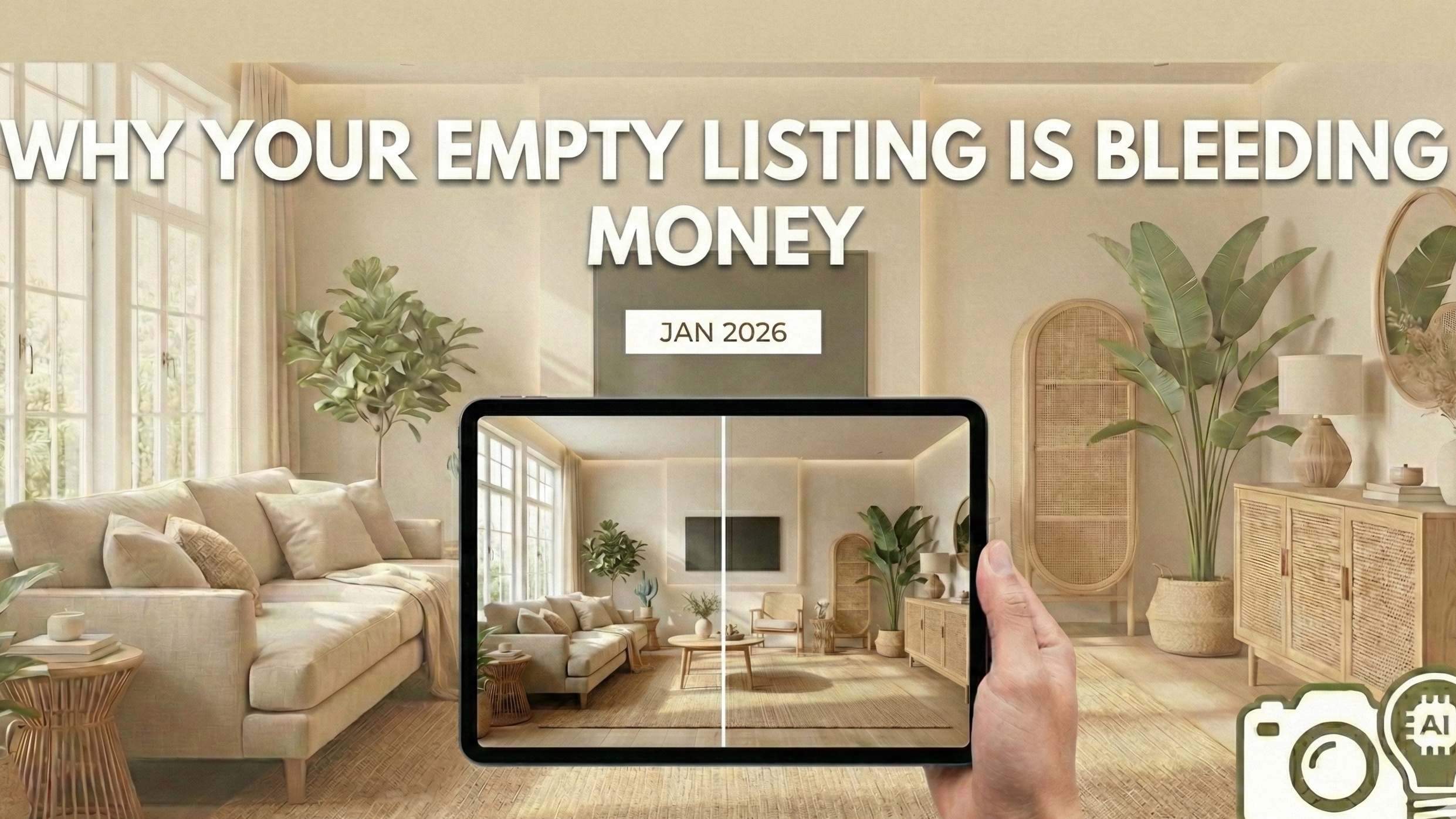
In 2026, a vacant home isn't just a blank slate; it's a liability.
Every day a property sits empty, it creates a "Desperation Signal." Buyers smell blood in the water, assuming the seller is carrying two mortgages and is ready to accept a lowball offer. Worse, the "Shrinking Room Syndrome" kicks in—without furniture to provide scale, that spacious master bedroom looks too small for a King bed.
But the risk isn't just psychological. From the 30-day insurance cliff to the rise of "professional tenants" (squatters), an empty house is a ticking time bomb.
Here is how to lock it down, insure it properly, and use AI to stage it for pennies—before the first showing.
1. The Vacant Home Paradox: Why Empty Rooms Don't Sell
You might think an empty house is a blank slate. You’re wrong. Most buyers have zero imagination.
When buyers walk into an empty room, they experience a cognitive block. They look at a 12x12 bedroom and think, "A bed won't fit here." They look at a large open-concept living area and feel lost, unsure of where the sofa goes.
The Optical Illusion of "Smallness"
Empty rooms lie. They look 30% smaller than they actually are. Furniture provides reference points. A bed tells the eye how much space is left for nightstands. A dining table shows the flow of traffic. When you remove those reference points, the walls seem to close in.
The Data
Higher Offers: Nearly 30% of agents report that staging increases the dollar value offered by 1% to 10%.
Faster Sales: Staged homes sell significantly faster—up to 73% faster than unstaged counterparts.
Online Traffic: 100% of buyers start online. Vacant photos get scrolled past; staged photos get clicked.
2. Protecting the Asset: The Logistics of Vacancy
A vacant home is a vulnerable home. Before you worry about aesthetics, you must secure the asset.
The Squatter Nightmare
In 2026, "professional tenants" targeting vacant listings are a genuine threat. If someone breaks in and establishes residency, eviction can take months.
Your Defense Strategy:
Digital Vigilance: Use smart sensors.
Physical Security: Secure all windows and post "No Trespassing" signs (often a legal prerequisite for police intervention).
Neighbors: Introduce yourself. They are your best alarm system.
The Insurance Trap
Most sellers have no idea their policy might expire if the house is empty.
⚠️ CRITICAL WARNING: Most standard homeowner’s insurance policies contain a Vacancy Clause. If a home is unoccupied for more than 30 or 60 days, coverage for vandalism, glass breakage, and water damage is often voided. If a pipe bursts on Day 31, your seller is likely paying out of pocket.
The Fix: Advise your seller to buy a Vacancy Permit Endorsement immediately. It costs extra, but it’s cheaper than a flooded house.
Smart Home Tech for Vacant Listings
You can't be there 24/7, but technology can.
1. Water Leak Detectors
A slow leak in a vacant house means black mold.
Pro Pick: Flo by Moen Smart Water Shutoff. It monitors the main line and automatically shuts off water if it detects a catastrophic leak.
Budget Pick: First Alert Wi-Fi Water Leak Detector. Place under sinks; it alerts your phone if it senses moisture.
2. Smart Locks
Stop using combo boxes that jam.
Recommendation: Lockly or Kwikset. Look for "Matter" support for easy integration. You can issue temporary codes for contractors and check if the door is locked from your phone.
3. The Staging Dilemma: Physical vs. Virtual
You have three options: Sell it empty (bad idea), physically stage it (expensive), or virtually stage it (smart).
Physical Staging: The "Gold Standard" Price Tag
Physical staging works, but the math rarely adds up for mid-market homes.
Cost: $2,000 to $5,000 setup + $500-$1,500/month rental.
Time: 7-14 days to install.
Liability: Moving furniture risks damaged walls and floors.
The Digital Tools You’ve Likely Hated
You’ve probably wasted hours on "paint visualizers" that crash or "virtual stagers" that take days.
Sherwin-Williams ColorSnap: Users report constant connectivity issues with the Match Pro device, and the "Instant Paint" feature often renders colors as pastel cartoons.
Behr ColorSmart: Notorious for crashing. Worse, the scanning is inaccurate—gray walls often scan as "salmon pink," killing your credibility with clients.
Benjamin Moore Personal Color Viewer: Requires you to manually "mask" the walls with your finger. It's tedious, slow, and if you miss a spot, it looks fake.
BoxBrownie: Reliable but slow. You pay $24 per image and wait 48 hours. If you don't like the style, you wait another 24 hours for a revision.
4. The Solution: Speed and Control
You don't need a warehouse of furniture. You need a tool that works as fast as you do.
Virtual staging is the ideal solution for vacant properties because:
The Canvas is Ready: No clutter to remove.
Cost is Minimal: Cents, not thousands.
Speed is Instant: Stage a home in the time it takes to brew coffee.
Enter Agent Lens
Agent Lens is a Chrome extension that uses AI to transform property photos directly in your browser. It solves the speed and cost problems inherent in older tools.
Comparison: The Old Way vs. The Agent Lens Way
Feature | Physical Staging | Traditional Virtual (BoxBrownie) | Agent Lens |
|---|---|---|---|
Cost | $2,000 - $5,000+ | $24.00 / image | $0.10 - $0.33 / image |
Turnaround | 7-14 Days | 48 Hours | 8-15 Seconds |
Flexibility | None (Fixed) | Low (Request & Wait) | High (Try styles instantly) |
Revisions | Impossible | Slow (24+ hours) | Instant |
Effort | Heavy Lifting | Email Coordination | Browser-based (DIY) |
The Toolkit: 11 Modes for Every Scenario
Agent Lens isn't a "one button" magic trick. It offers specific modes for specific problems.
1. Virtual Staging (The Style Builders)
Organic Modern: Natural, minimalist, Japandi-inspired. Earth tones, boucle, linen. Best for: Modern condos, new builds.
Mid-Century Modern: Tapered legs, walnut woods, olive green accents. Best for: Homes with architectural character.
Modern Farmhouse: Rustic charm, reclaimed wood, black metal accents. Best for: Suburban family homes.
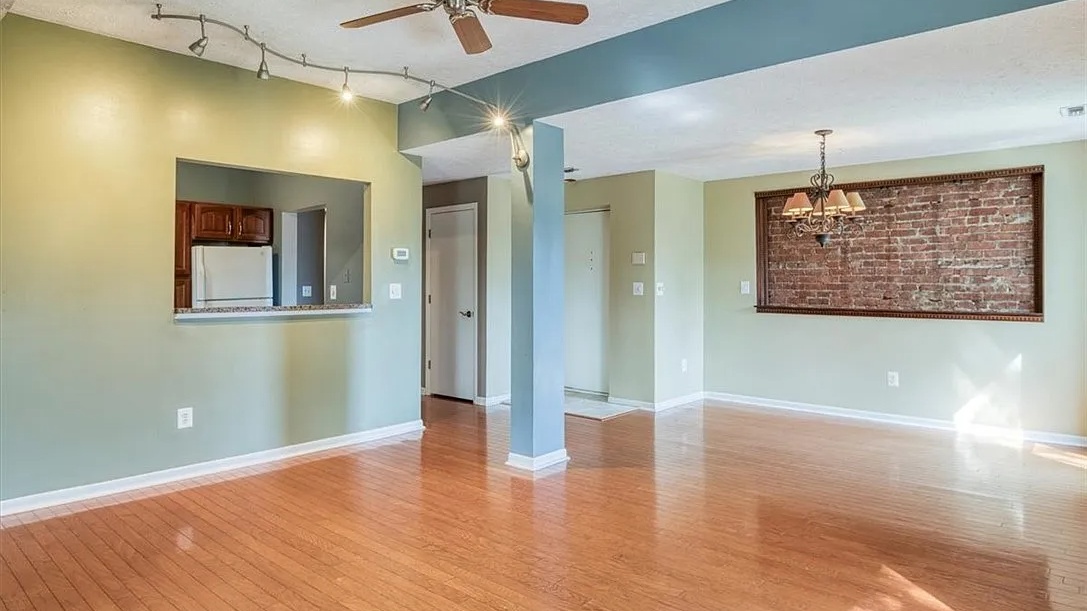
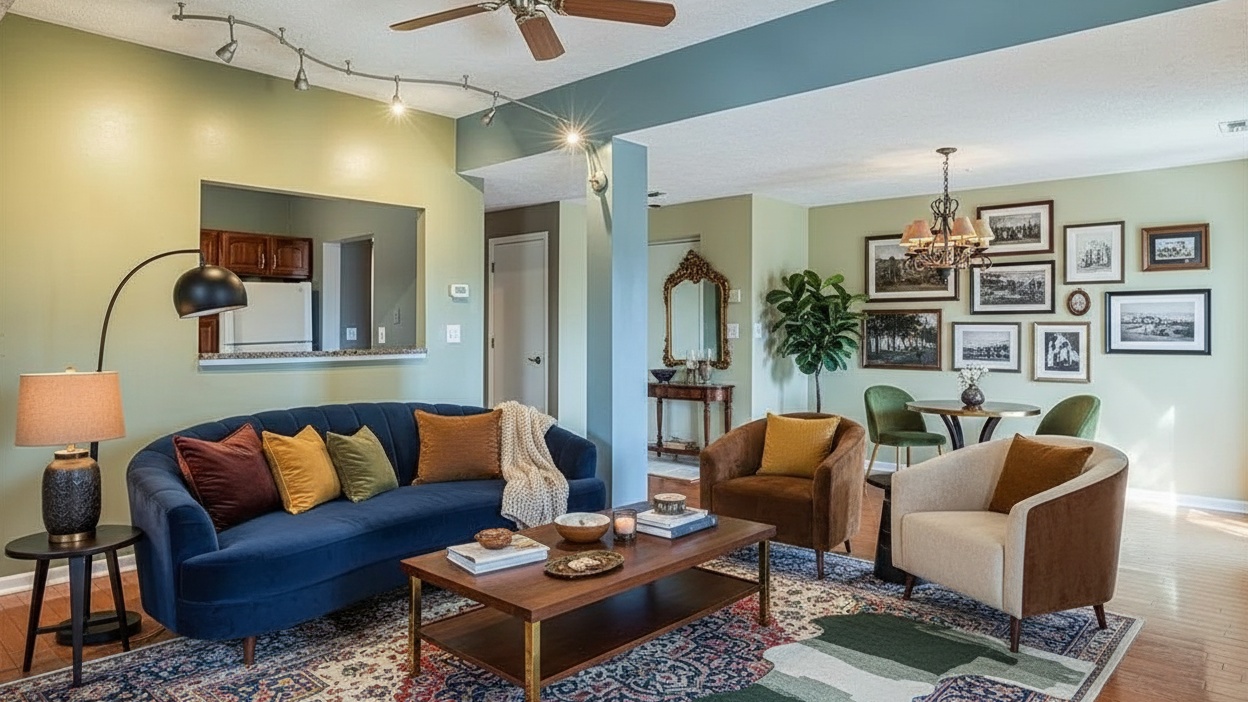
Warm Maximalism: Moody luxury, velvet textures, deep colors. Best for: Historic homes or small spaces needing "coziness."
2. Functional Tools (The Fixers)
Classic Mode: Universal enhancement. Brightness, 15-25% saturation boost, natural light cleanup.
Virtual Declutter: Removes personal items but KEEPS furniture.
Curb Appeal Pro: Sky replacement and grass green-up. NO paint/architecture changes. Crucial for staying compliant.
Magic Eraser - Empty Room: Removes all furniture to create a blank canvas. Use this first on homes with ugly furniture.
3. Virtual Renovations (The Visionaries)
Kitchen Remodel: Replaces countertops (quartz), repaints cabinets, updates backsplash.
Interior Renovation: Fixes walls, floors, fixtures.
Exterior Makeover: Full facade repaint + landscaping.
Want to test this? Agent Lens offers 3 free credits on signup—no credit card required.
5. Marketing the Vacant Home in 2026
Securing the home and staging the photos is only half the battle. You have to drive the traffic.
The "Hybrid" Open House
The "Soft" Stage: Put something in the house. A welcome mat, a few blooming plants, fresh towels. Break the sterility.
Print the Potential: Print your Agent Lens virtually staged photos on large foam boards. Place them in the empty rooms on easels. Let buyers see the reality and the potential simultaneously.
QR Codes: The Digital Connector
Don't just link to your homepage.
Room-Specific Codes: Place a card on the kitchen counter: "Scan to see this kitchen remodeled." Link to the Kitchen Remodel image.
Audio Tours: Link a QR code to a simple audio file of you highlighting features. Add a human voice to the empty silence.
6. Design Trends 2026
Stop using cool grays. They are out.
Biophilic Design: Bringing nature in. Plants, wood textures, green tones. Use Organic Modern mode.
Japandi: Japanese rusticity meets Scandinavian function. Clean lines, low furniture. Use Organic Modern mode.
Warm Neutrals: Beiges, creams, terracotta. Use Modern Farmhouse or Mid-Century Modern to make empty spaces feel "hygge".
Stop Showing Empty Rooms
Buyers lack imagination. It is not their fault, but it is your problem. If you force them to visualize a life in an empty box, you will lose the offer to the agent who showed them a home.
You don't need a warehouse of furniture or a $5,000 budget. You need a smartphone and the right software. Whether you use Agent Lens or another tool, the rule for 2026 is simple: protect the asset physically, but sell the vision digitally.
Next Step: Go to your oldest, coldest vacant listing.
Free Real Estate Tools
Explore our free calculators and AI tools for agents:
Transform Your Listings with AI
Apply professional virtual staging and enhancements in seconds. Start transforming your listings today.
Explore Virtual Staging Options
Start with our most popular room & style combinations: