

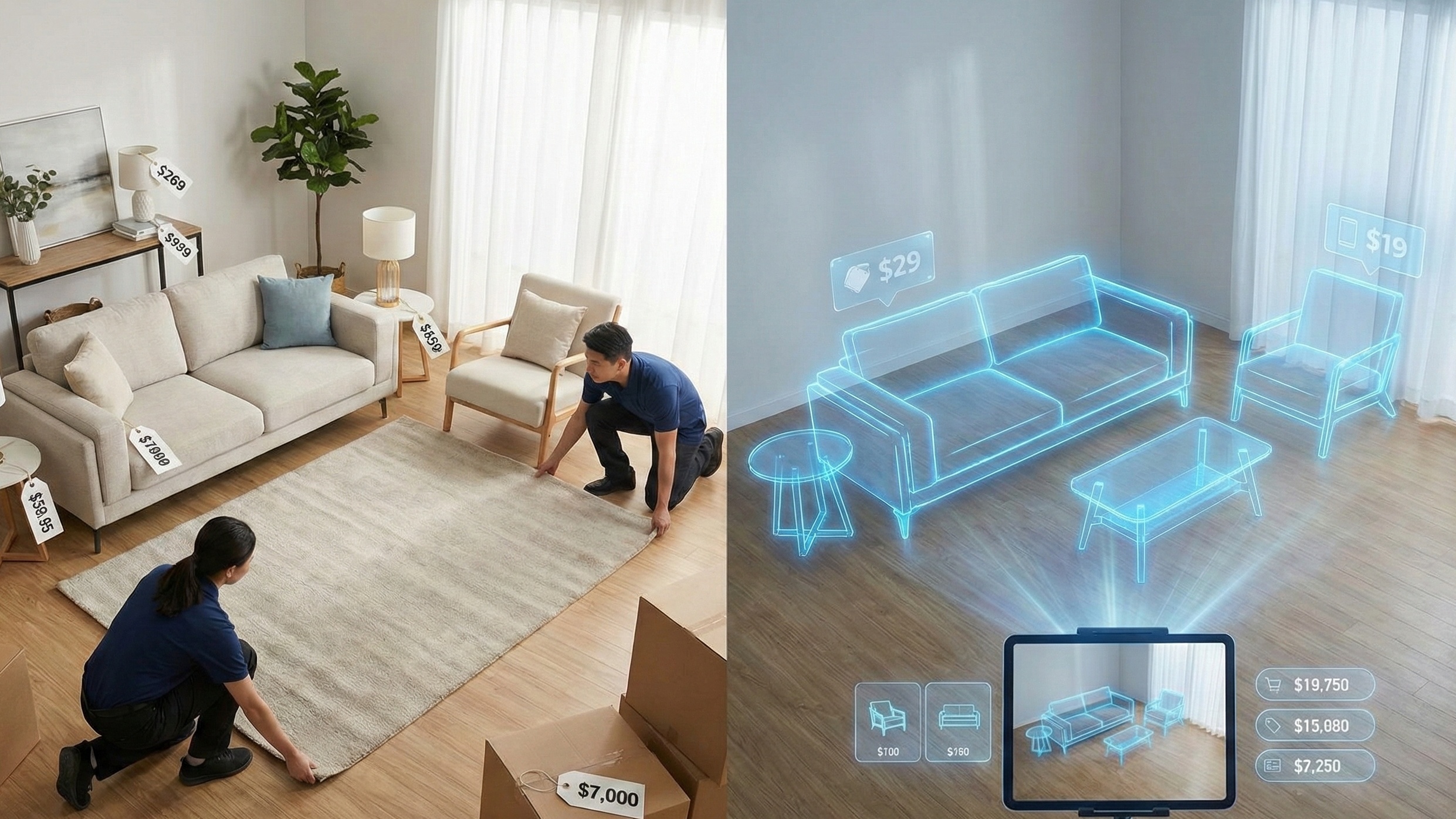
1. Virtual vs. Physical Staging: The 2026 ROI Reality Check
Let’s be honest: physical staging is a logistical nightmare. It’s expensive, it’s slow, and it eats into your commission before you’ve even secured an offer. But in 2026, listing a vacant home is professional suicide.
The market has officially split in two. If you are selling a luxury estate ($1M+), you still need the movers and the marble tables. But for the volume market? The math has changed. Physical staging costs have ballooned to over $4,000 per listing, while AI-driven virtual staging has dropped to pennies on the dollar—delivering 3,000% ROI.
We audited the 2026 market to give you the hard numbers. Here is why the "Volume Market" belongs to digital staging, and how you can use tools like Agent Lens to list faster, cheaper, and better.
2. The New Seller Reality: The "Silver Tsunami"
To understand why staging is non-negotiable right now, you have to look at who is selling. We are in the middle of the "Silver Tsunami." Baby Boomers are downsizing, and they are flooding the market with homes they’ve lived in for 30 years.
Here is the problem. These homes are well-loved, but they often suffer from "deferred modernization." When a Millennial buyer walks into a vacant Boomer home, they don't see potential. They see:
Old carpets that need ripping out.
Faded paint that screams 1998.
Obsolete fixtures that cast yellow light.
A vacant, dated home scares off buyers who are already stretched thin by interest rates. They want "move-in ready," not a weekend project.
Physical staging can hide some of these flaws, but it can’t fix a dated kitchen without a renovation budget. Virtual staging, however, allows you to show the potential of the space instantly. You bridge the gap between the "as-is" condition and the buyer's HGTV expectations.
3. Physical Staging: The Heavy Cost of "Real" Furniture
Physical staging still works. In fact, for the right house, it’s magic. But in 2026, the price of admission has skyrocketed. We looked at the data from the Real Estate Staging Association (RESA) and recent market reports. Inflation hasn't just hit the grocery store; it’s hit the furniture rental business hard.
The Real Numbers
If you decide to physically stage a standard 2,000 sq. ft. home, get your checkbook ready.
Consultation Fees: You’re looking at $150 to $600 just to get a designer in the door to tell you what to do.
The "Setup" Fee: This covers the movers, the heavy lifting, and the design time. Expect to pay $1,000 to $2,000 upfront.
Monthly Rental: This is the killer. Renting furniture costs between $500 and $600 per room, per month.
Most staging companies now demand a 3-month minimum contract to cover their logistics costs. Let's do the math for a standard 3-bedroom home where you stage the living room, dining room, and primary suite.
Your Bill:
Item | Cost |
|---|---|
Initial Consult | $300 |
Delivery & Setup | $1,500 |
3 Months Rent (3 rooms) | $4,500 |
TOTAL | $6,300 |
That is $6,300 of capital tied up in a house that hasn't sold yet. If the house sells in week one? You don't get a refund on the remaining two months of furniture rental. That money is gone.
The Luxury Mandate
There is one exception: Luxury Real Estate ($1M+).
If you are listing a multi-million dollar property, virtual staging isn't enough. High-net-worth buyers are buying a feeling. They need to touch the textures and hear how the rug dampens the echo in the great room. In this bracket, spending $20,000 to $60,000 on staging is just the cost of doing business.
But for the house down the street listed at $550,000? A $6,000 staging bill is insane.
4. Virtual Staging: The 2026 Disruptor
If physical staging is the expensive sledgehammer, virtual staging is the surgical laser. It’s fast, it’s cheap, and the tech has gotten scary good.
The Price Crash
While physical costs went up, digital costs crashed.
Manual Professionals: Service bureaus like BoxBrownie or Styldod charge between $16 and $75 per image.
AI Automation: New AI tools have pushed the cost down to as low as $0.24 per image.
You can stage an entire home—every bedroom, the awkward basement, and the patio—for under $200.
Speed is the New Currency
The biggest advantage isn't money; it's time. Physical staging takes 7-14 days to coordinate. In this market, two weeks is an eternity.
Virtual staging turns around in 24 to 48 hours. Some AI tools do it in seconds.
You can take photos on Wednesday and list on Friday.
The "Hybrid Staging" Hack
I know what you're thinking. "But buyers will be disappointed when they visit the empty house."
That is a valid fear. The "catfish effect" is real. But top agents have solved this with Hybrid Staging.
The Easel Strategy:
"Put the enlarged photos on art boards and put them in the actual room... that way, the buyers don't have to pull their phone up. It reminds them of the potential they saw online." — Industry Expert
Print your beautiful virtual staging on a large foam board. Put it on an easel in the empty room. Now, the buyer stands in the vacant space, looks at the easel, and immediately understands the layout. You get the marketing click online and the visualization offline.
5. Competitor Analysis: The Good, The Bad, and The Glitchy
You have choices for virtual staging. But after testing the major players, we found some serious cracks in the armor.
The Service Bureaus (BoxBrownie & Styldod)
BoxBrownie is the industry giant. They are reliable, but they are slow. Their standard turnaround is 48 hours. If you need a revision because they put a weird lamp in the corner? Add another 24 hours. They charge around $24 per image.
Styldod is the budget option at roughly $16 per image. They offer unlimited revisions, which is great, but users report inconsistent quality. Sometimes the lighting looks perfect; other times the furniture looks like it's floating a few inches off the floor.
The Paint App Failures
Trying to virtually paint a room? Avoid the big paint brands.
Sherwin-Williams ColorSnap: Great paint, terrible tech. Users constantly complain about the "Match Pro" device failing to connect via Bluetooth. It’s a hassle you don't need at a listing appointment.
Behr ColorSmart: Watch out for the "Salmon Pink" glitch. Agents report that neutral beige colors often render as pink on mobile screens. You do not want to send a client a photo of their new living room looking like a bottle of Pepto-Bismol.
Benjamin Moore Personal Color Viewer: This app forces you to manually "mask" the walls with your finger. It’s tedious, buggy, and frankly, you have better things to do than trace baseboards on an iPhone screen.
6. The Solution: Enter Agent Lens
t’s not just a "virtual stager"; it’s a complete property intelligence tool built for speed.
Midway through our testing, the difference became obvious. While BoxBrownie makes you wait two days, Agent Lens works in seconds. It allows you to visualize potential right in your browser.
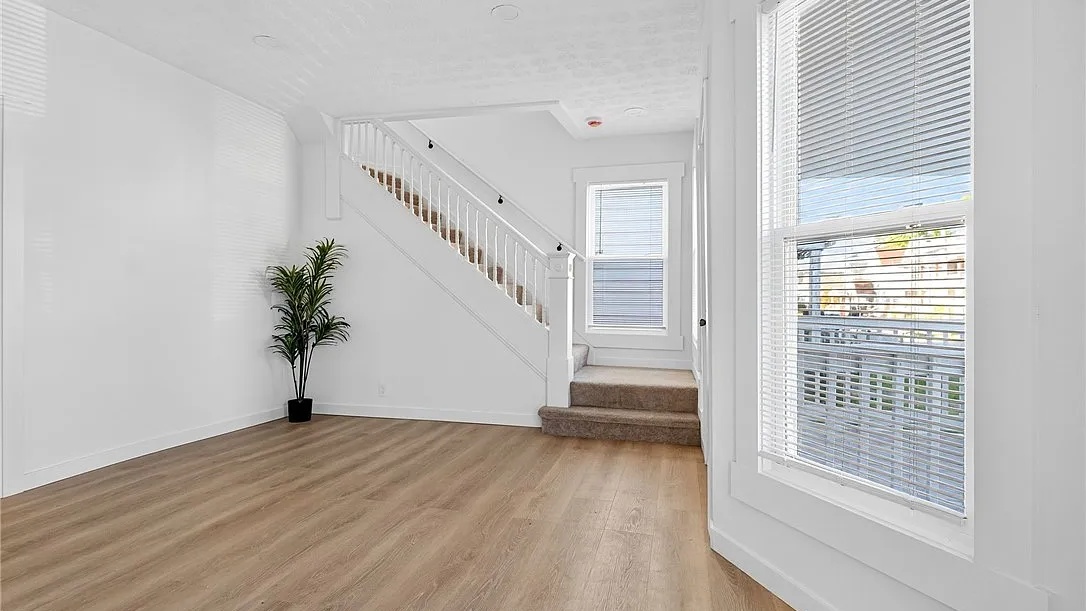
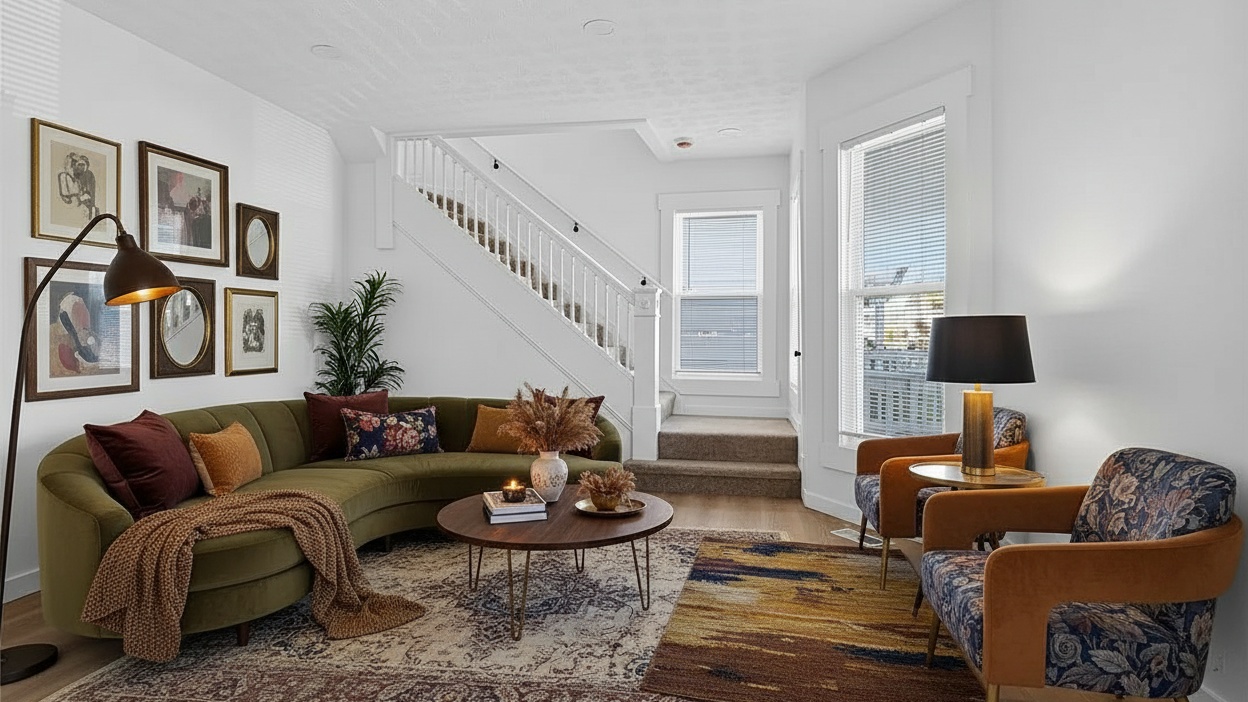
Before & After: See the power of Warm Maximalism. While the empty room feels cold and generic, the staged version uses "dopamine decor"—bold colors and cozy layers—to create an immediate emotional connection. Created in seconds with Agent Lens.
Here is how you use it to win the listing:
The "Silver Tsunami" Fix
Got that dated Boomer home? Use the Virtual Renovation modes.
Kitchen Remodel: Instantly replace those honey-oak cabinets with a modern matte finish and swap the laminate counters for quartz.
Interior Renovation: Fix the walls and flooring. Show the buyer what the house looks like without the 1990s wallpaper.
Exterior Makeover: This is huge for curb appeal. Digitally repaint the facade and freshen up the landscaping to get buyers to click the listing.
Staging for Specific Buyers
Unlike physical staging, where you are stuck with one furniture set, Agent Lens lets you target demographics using specific Virtual Staging modes:
Organic Modern: Use this for Millennials. Think Japandi style—earth tones, boucle fabrics, and linen. It’s the hottest trend of 2026.
Mid-Century Modern: Perfect for that hip downtown condo. Walnut woods and tapered legs.
Warm Maximalism: Use this for younger, trendy buyers who hate "sterile" designs. It adds moody luxury with deep velvets and rich colors.
Modern Farmhouse: Use sparingly! (Trends are shifting away from this, but it still works in rural markets).
Functional Tools for Speed
Agent Lens also includes utility modes that save you hours of Photoshop work:
Virtual Declutter: Perfect for tenant-occupied homes. It wipes away the mess but keeps the main furniture.
Magic Eraser - Empty Room: Completely clears a room so you have a blank canvas.
Curb Appeal Pro: Fixes the sky and the grass without altering the house itself.
Best of all? It costs between $0.10 and $0.33 per image on the Pro plan. You can stage every room in the house for the price of a latte.
7. The 2026 Decision Matrix
So, when do you spend the big money? Use this simple threshold guide.
8. Design Trends You Need to Know (Stop Using Grey!)
If you are virtually staging, you need to use the right furniture. Putting 2015 "Grey everything" furniture in a 2026 listing makes the house look stale.
1. Organic Modern is King
This is the default style for 2026. It’s all about curves and nature.
Look for: Rounded sofas, stone tables, beige and cream palettes.
Why: It feels calm and expensive.
2. Warm Maximalism is the "Anti-Flip"
Buyers are tired of the "white box" flipper look. They want personality.
Look for: Dark accent walls (emerald, navy), gallery walls, and layered rugs.
Why: It makes a house feel like a home, not a hotel.
3. Moody Mid-Century
MCM isn't dead, but it’s gotten darker.
Look for: Darker walnut woods, velvet textures, and "moody" lighting.
4. Modern Farmhouse is Fading
Be careful here. The "white shiplap" look is trending down. Unless the property is literally a farmhouse, try to steer towards Organic Modern instead.
9. Conclusion: The Verdict
Stop Apologizing for Vacant Rooms.
The data is clear. Unless you are selling a luxury property where the buyer needs to physically feel the cashmere throws, traditional staging is a bad bet. It burns cash, locks you into 3-month contracts, and kills your speed-to-market.
2026 is the year of the "Hybrid" approach. Win the click online with "Organic Modern" virtual staging, and win the tour offline with easel prints in the home. The technology finally works. It’s time to stop treating virtual staging as a "backup plan" and start using it as your primary weapon.
Your Next Move: Don't let a dated paint job sit on the market for 90 days. Use Agent Lens to digitally renovate, stage, and launch by Friday. The market moves too fast for furniture trucks.
Want to test this?
Agent Lens offers 3 free credits on signup—no credit card required.
Install Agent Lens Extension – Get 3 Free Credits
Free Real Estate Tools
Explore our free calculators and AI tools for agents:
Transform Your Listings with AI
Apply professional virtual staging and enhancements in seconds. Start transforming your listings today.
Explore Virtual Staging Options
Start with our most popular room & style combinations: