

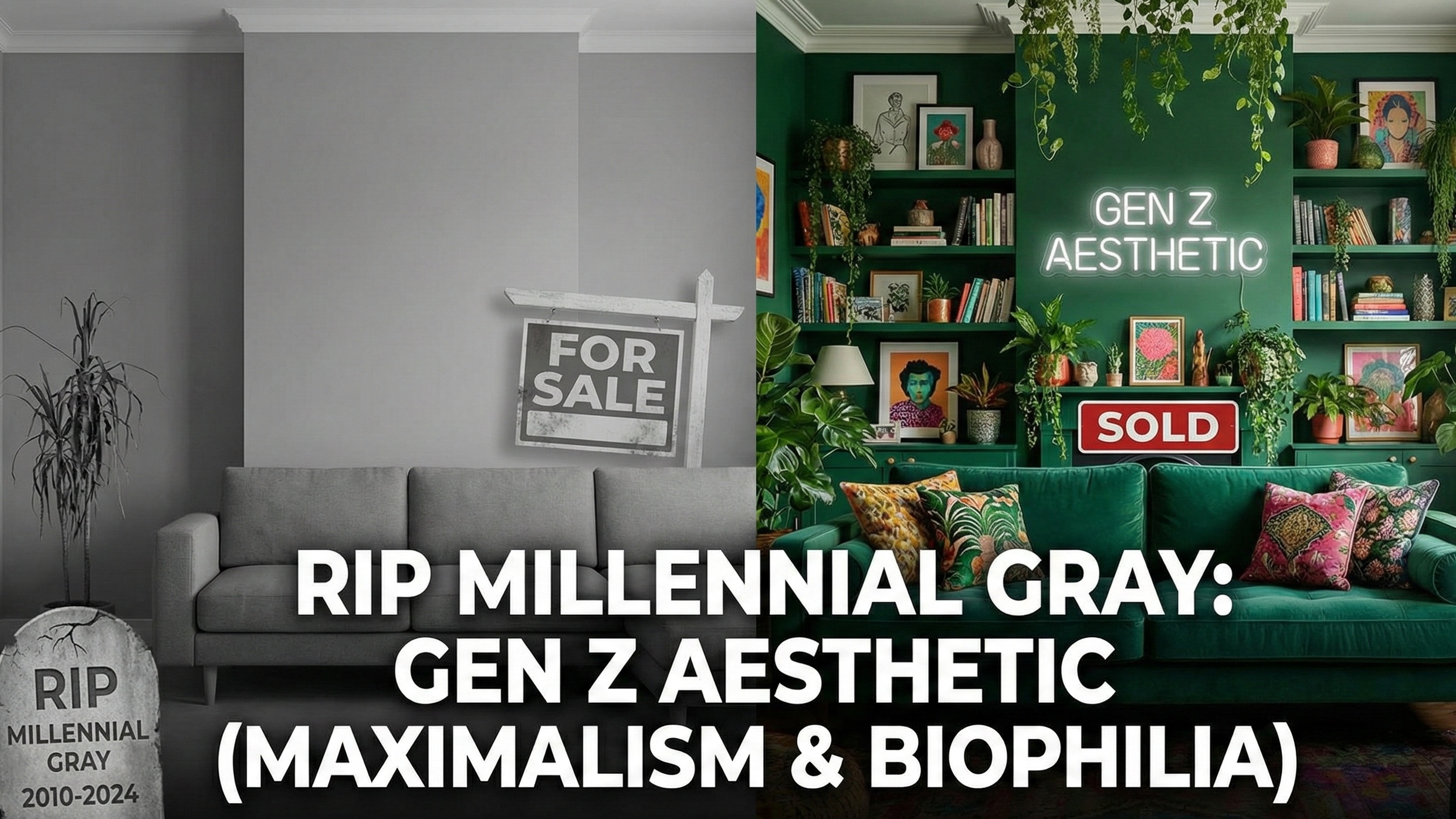
For twenty years, the real estate industry has worshipped at the altar of "Millennial Gray." We stripped homes of personality, painted everything "Agreeable Gray," and told sellers to depersonalize for mass appeal. It worked—until it didn't.
Enter 2026. The "Landlord Special" aesthetic isn't just boring to the emerging Gen Z buyer; it’s an insult. This new cohort—driven by high debt, high standards, and a "doom spending" mindset—views minimalism as sterile. They don't want a blank canvas. They want a vibe.
Here is the problem: Most agents are still staging for 2015. If you are ignoring the interior design trends 2026 is ushering in, you are leaving money on the table.
This guide breaks down the shift to moody interiors, explains why biophilic design trends are non-negotiable, and shows why old-school visualization tools are failing to capture the new "Dopamine Decor" economy.
1. The "Sad Beige" Rebellion: Gen Z Home Buying Preferences
To understand Gen Z home buying preferences, you have to understand their mindset. They are entering the market with a "nesting for survival" mentality. They aren't looking for a stepping stone; they are looking for a sanctuary.
Data shows that while Gen Z faces steep affordability hurdles, 67% planned to buy in 2025. But they are picky. A staggering 58% abandoned their search last year because homes felt too "corporate."
Here is what defines Gen Z home buying preferences today:
Rejection of the "Landlord Special": Cheap, gray vinyl flooring signals a rental, not a home.
End of Open Concepts: The pandemic killed the open box. Interior design trends 2026 point to "nooks" and defined spaces.
Craving for Moody Interiors: White walls used to mean "clean." Now, they mean "hospital."
Gen Z wants Dopamine Decor—interiors that trigger joy. They don't have the budget for massive renovations, so they want the aesthetic installed on day one.
2. Maximalism vs Minimalism: The Great Shift
The battle of maximalism vs minimalism has been won, and minimalism lost. But don't confuse maximalism with mess.
When analyzing maximalism vs minimalism, consider this: Minimalism creates space by removing things; Maximalism creates emotion by curating things. For staging, this is a critical distinction.
The Staging Breakdown: Maximalism vs Minimalism
Minimalism (Out): Focuses on negative space, white walls, and hiding daily life.
Maximalism (In): Focuses on storytelling, layered textures, and showcasing identity.
The Verdict in Maximalism vs Minimalism: Gen Z chooses abundance. They want to see life in the listing.
However, there is a balance. In the maximalism vs minimalism spectrum, you want "Curated Maximalism." This means gallery walls and floor-to-ceiling bookshelves (vertical density), not cluttered countertops (horizontal mess).
3. Trend Alert: Color Drenching
If you only learn one term from the interior design trends 2026, make it "Color Drenching."
The days of the accent wall are over. Color drenching involves painting everything—walls, trim, baseboards, crown molding, and even the ceiling—in a single, saturated hue.
Why Color Drenching Wins:
It hides flaws: Color drenching masks unsightly vents or uneven door frames.
It expands space: Without the visual "stop" of white trim, color drenching makes small rooms feel seamless and larger.
It creates Moody Interiors: Color drenching is the fastest way to achieve that high-end, "English Estate" look.
The Palette: Think moody interiors. We are talking Oxblood, Terracotta, and Forest Green. If you show a Gen Z buyer a room with "Chantilly Lace" white walls, they see a chore. If you show them a library using color drenching in "Urbane Bronze," they see a lifestyle.
4. Biophilic Design Trends: Plants Are Infrastructure
Biophilic design trends are not just about putting a fiddle-leaf fig in the corner. They are about blurring the line between inside and outside.
For a generation reporting record levels of anxiety, a home that lowers cortisol is a premium product. Key biophilic design trends for 2026 include:
Greenery as Architecture: Using living walls to divide a room is one of the top biophilic design trends.
Natural Materials: Swap chrome for raw wood and stone.
Lighting: Kill the "Big Light." Biophilic design trends prioritize ambient, warm lighting that mimics natural sunset hues (2700K bulbs).
5. The Tech Gap: Why Your Paint App is Costing You Deals
You know the interior design trends 2026 demands. But how do you show them?
Historically, agents tried to use paint visualization apps from big manufacturers.
Sherwin-Williams ColorSnap: Connectivity hell.
Behr ColorSmart: The "Salmon Pink" glitch (colors render incorrectly).
Benjamin Moore: Manual masking that takes hours.
These tools can't handle color drenching or complex biophilic design trends. They were built for DIY homeowners in 2010, not for professionals selling moody interiors in 2026.
6. The Solution: Speed Staging with Agent Lens
This is where Agent Lens changes the game. It’s a Chrome extension that uses AI to visualize interior design trends 2026 instantly.
Instead of fighting with Bluetooth, you can transform a listing in seconds.
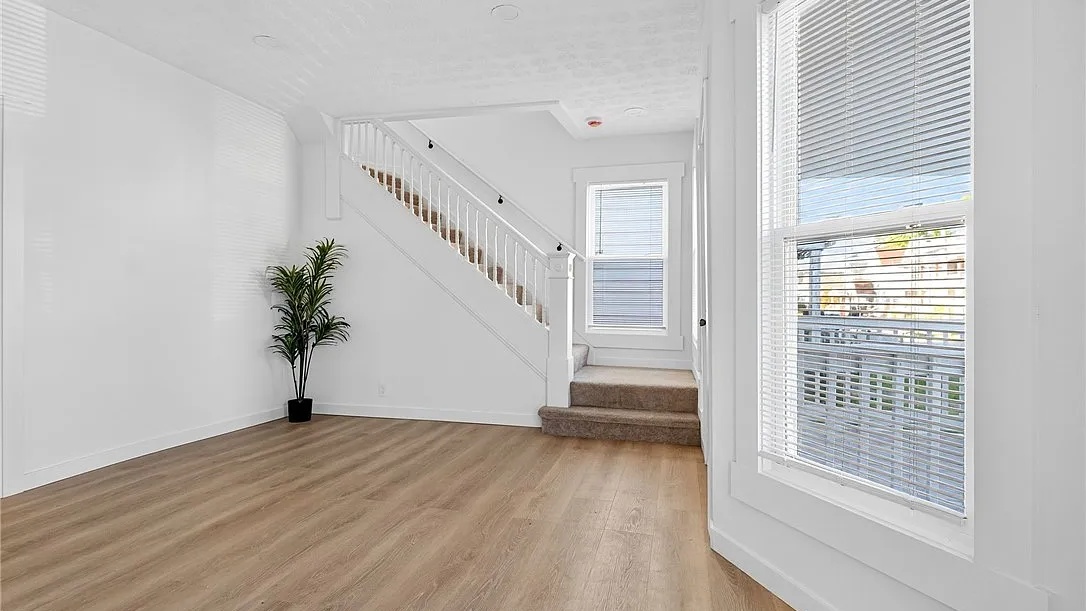
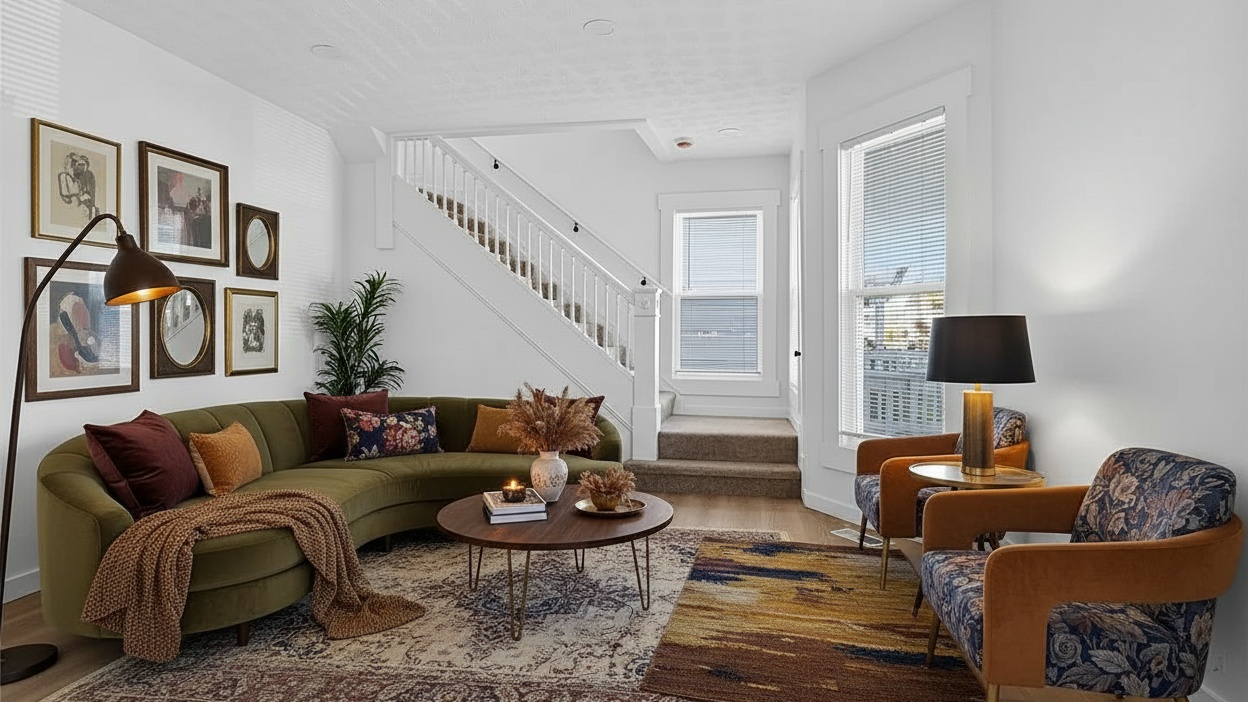
For the Empty "Gray Box" Listing:
Use Virtual Staging (Warm Maximalism). This mode is practically built for Gen Z home buying preferences. It fills the room with deep colors and moody interiors, solving the sterility problem instantly.
For the Cluttered "Grandma" House:
Use Virtual Declutter. This resolves the maximalism vs minimalism conflict. It removes the junk (magazines, pills) but keeps the "bones," preparing the canvas for color drenching.
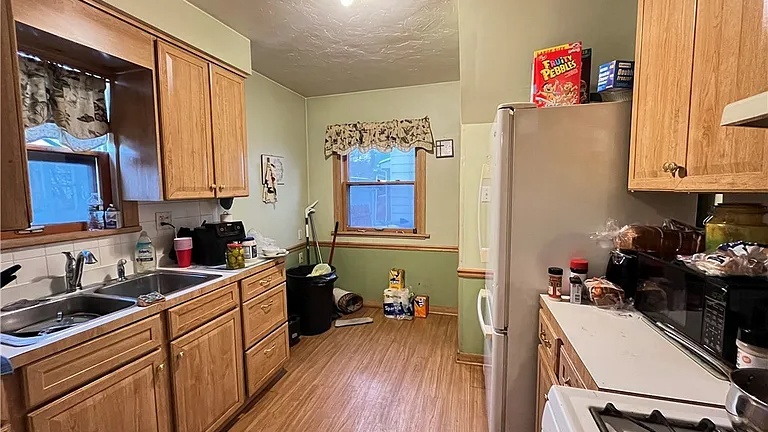
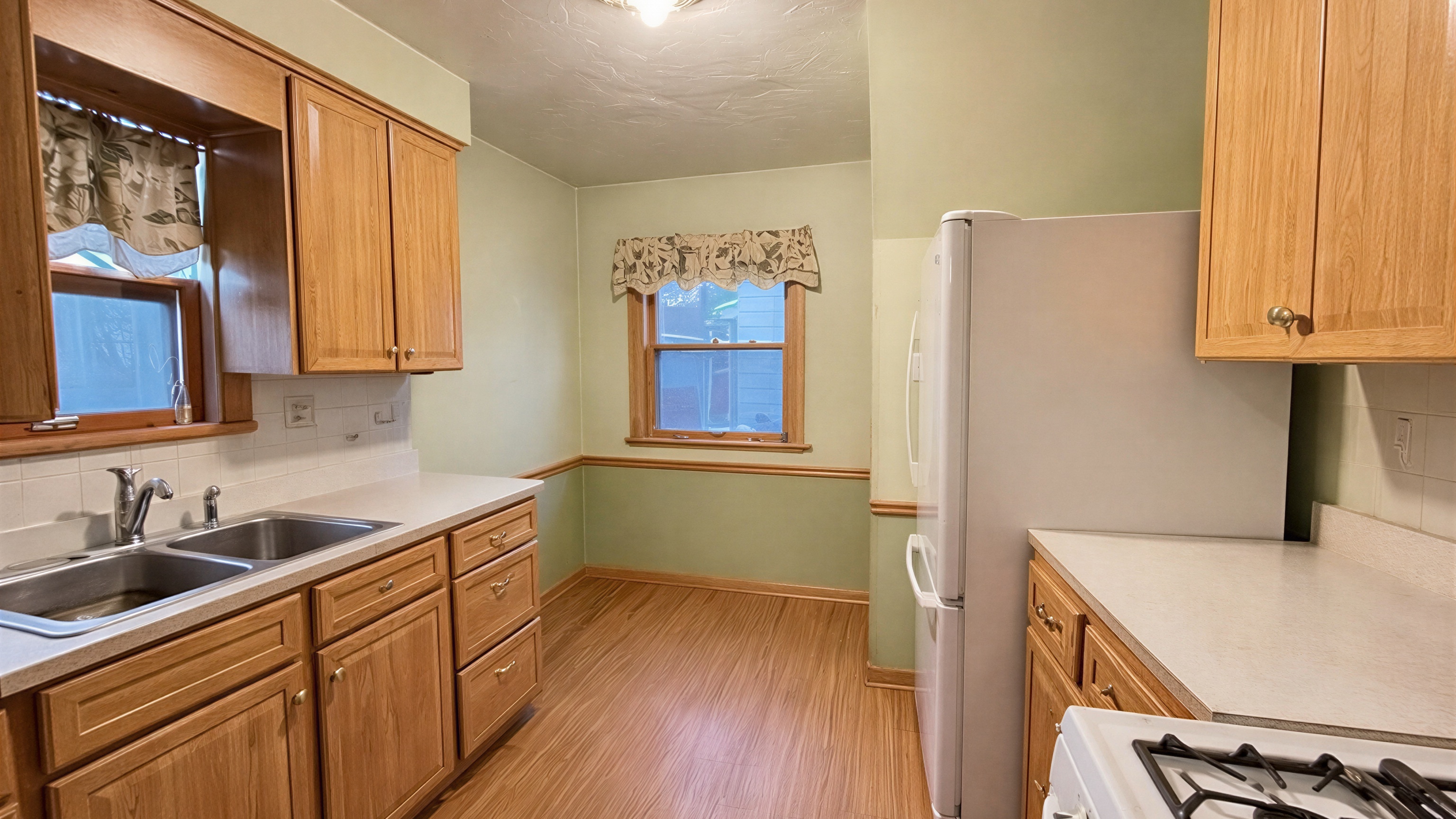
For the Dated Kitchen:
Use Virtual Renovation. Don't just say "it has potential." Show it. Apply biophilic design trends like natural wood cabinets and quartz to prove the value instantly.
7. The Economics of Virtual vs. Physical
Let's talk numbers.
Physical Staging: $1,500+ upfront. You get one look (usually safe minimalism).
Agent Lens: Roughly $0.10 per image.
More importantly, Agent Lens lets you A/B test. You can generate one version in "Modern Farmhouse" for the parents, and another focusing on moody interiors and maximalism vs minimalism balance for the Gen Z buyer.
The Bottom Line: Adapt or Fade Away
The death of "Millennial Gray" is a correction. We are returning to the idea that a home should feel like a human habitat.
For the modern agent, this requires a toolbox upgrade. You can no longer rely on physical staging alone. The winners in 2026 will be the agents who use AI to simulate color drenching, showcase biophilic design trends, and nail the Gen Z home buying preferences before the buyer even steps inside.
Stop apologizing for personality. In the new market, "Safe" doesn't sell. "Soul" does.
Ready to upgrade your marketing?
Free Real Estate Tools
Explore our free calculators and AI tools for agents:
Transform Your Listings with AI
Apply professional virtual staging and enhancements in seconds. Start transforming your listings today.
Explore Virtual Staging Options
Start with our most popular room & style combinations: