


You have three seconds to hook a buyer. That's it.
Here's the problem: buyers are scrolling right past listings that sound like a robot hit copy-paste. They're instantly tuning out the vague, fluffy phrases like "a true gem" or "opportunity knocks." You just wasted your one chance to capture their limited attention.
Yes, the real estate industry is fast. Almost half (46%) of agents now use AI for listing content. But this rapid adoption often leads to lazy, robotic fluff that fails to connect emotionally with a potential buyer. If your AI description doesn’t feel unique, personalized, and specific to the property, you’re losing crucial clicks.
We can fix this right now. This isn’t about ditching AI; it’s about mastering Prompt Engineering. You need to train your AI to write copy that sounds like you, focuses on specific emotions, and pairs perfectly with your stunning visual marketing. We’ll show you how to get those high-quality results and find the best AI for real estate descriptions for your business.
1. The Quiet Crisis: When Generic AI Kills Your Listing
The Cost of Being ‘Vanilla’
Forget the old playbook: The online listing is now your only first showing. Almost all buyers—a staggering 96%—begin their home search on the internet. If your listing doesn’t grab them instantly, they move on to the next house. This quick scroll time means your description must do heavy lifting immediately.
Key Shift: From Technology to Mastery
The competitive advantage for top agents has shifted from simply having technology to mastering it. This means:
As one agent noted, the job of a Realtor is marketing, and unique content is essential for differentiation.
Generic descriptions just waste your first impression.
When all listings use the same language, the differential value of listing copy declines, forcing buyers to focus solely on price and raw photos.
Using basic AI commands for descriptions creates a friction point. Agents sought efficiency through AI, but the poor conversion quality resulting from homogenized content defeats the ultimate goal. This isn't just a creative issue; it’s a financial one. Listings with strong, unique copy drive better traffic. Real estate search ads already enjoy a 3.71% CTR. Better copy means more qualified clicks for the same budget, which directly improves your overall campaign Return on Investment.
Why Your ChatGPT Draft Sounds Like a Robot
If you only give your AI tool minimal input—such as beds, baths, and square footage—it will inevitably give you minimal output. The problem is not the tool itself, but the instruction. AI is a mirror. It reflects the lack of specific audience, emotional texture, and unique selling proposition in your command.
The key difference between a successful listing and a dull one is the nuanced context that a professional copywriter would apply. The AI is missing the answer to essential questions: Who is the buyer? What is their lifestyle? What emotional benefit does this house offer? The bottom line: Stop issuing simple commands and start applying the detailed context that drives creative output. This strategic shift is the core of prompt engineering.
2. Your Prompt Engineering Blueprint: The Triple-Threat Strategy
Mastering AI means turning simple requests into money-making instruction sets. You need a repeatable framework that overrides the AI's default tendency toward genericism. This three-step blueprint is the core of sophisticated AI content creation.
Step 1: Context and Role (Who is the AI? Who is the Reader?)
You must define the boundaries for the AI before it writes a single word. You start every prompt by assigning a precise role and defining the specific audience. For example, you wouldn't just ask for a description. You would start with:
"You are a seasoned luxury real estate agent specializing in historic homes in Charleston, SC. Your voice is sophisticated and confident. Write for a highly educated, discerning buyer, age 50+."
By providing examples of your required voice—be it casual, professional, luxury, or playful—you ensure the generated copy is authentic to your brand. This consistency builds client trust and helps you avoid the "impersonal or generic" tone that can turn off prospective buyers who seek tailored interactions. This ability to segment and customize marketing copy instantly for niche audiences increases the relevance of the listing.
Step 2: Emotional Hooks Over Features
Buyers don’t buy stainless steel appliances; they buy the feeling of hosting a holiday dinner in a chef’s kitchen. Prompt the AI to ditch the specs and talk about lifestyle, sensory details, and the underlying emotional why.
The goal is to focus on the benefit. Instead of detailing the "large primary bedroom," you should prompt the AI to focus on the experience: "A sprawling primary sanctuary designed for quiet retreat after a busy day, flooded with soft morning light." This instruction forces a compelling narrative flow, moving naturally from the entry to key features and closing remarks. This prevents the AI from generating a flat, unengaging bulleted list of features.
Step 3: Audience Filtering (The Investor vs. The First-Timer)
The structural facts of the property remain constant, but the description's slant must change drastically based on who you’re trying to reach. The benefit of highly refined prompts is that they become proprietary business assets; save them and categorize them for repeatable, systematic success.
If you are targeting an investor buyer, prompt the AI to focus on verifiable, financial data: "Generate a bulleted list optimized for an investor buyer. Include estimated rental yield, low maintenance exterior, and clear ROI potential.
Conversely, if the audience is a first-time homebuyer, prompt the AI to focus on ease and security: "Write a friendly, encouraging description for a first-time buyer. Highlight the move-in readiness and proximity to neighborhood amenities.
For more on color trends, see 2026 Exterior Paint Trends: Sage Green is the New Gray
3. Choosing Your Engine: LLMs vs. Specialized Real Estate AI
To select the best AI for real estate descriptions, you must understand the trade-offs between creative flexibility and operational focus. The optimal workflow often requires an ecosystem of tools.
General LLMs (ChatGPT/Gemini): The Flexibility Advantage
General Large Language Models (LLMs) like ChatGPT are incredibly powerful. In fact, ChatGPT is the most widely used AI tool among agents, preferred by 58% of professionals utilizing AI. They are excellent at creative, free-form content generation when given proper instructions. These tools are ideal for generating creative narratives, scripting listing videos, and refining agent bios.
Their critical limitation, however, is their lack of proprietary real estate data and compliance training. LLMs often "hallucinate"—they create plausible but false facts—meaning human oversight and mandatory fact-checking are required before publishing anything.
Specialized Tools: The Workflow Focus (Structurely & Lofty AI)
Specialized tools like Structurely and Lofty AI focus on distinct, operational parts of the real estate workflow. Structurely, for instance, is highly focused on lead qualification, nurturing, and follow-up via automated calls and texts. It is designed to shorten sales cycles by engaging up to four times more leads. Lofty AI offers a broader integrated CRM experience that covers comprehensive business operations and lead generation.
While valuable for lead management, these systems sometimes prioritize efficiency over creative output. If the agent relies on their native listing copy generation without detailed input, the risk of falling into the "impersonal or generic" language agents are trying to escape remains high.
Integrated systems, like Lofty AI, can introduce new frustrations, with users reporting a "steep learning curve" and issues with "poor customer support."
Spending the typical monthly tech budget ($50–$250) on high-cost platforms primarily for creative description writing when a well-prompted general LLM can do the job better is often inefficient.
Table 1 Title: AI Tool Comparison: Creative Content vs. Operational Workflow
AI Tool Category | Primary Function | Key Limitation | Target Workflow |
|---|---|---|---|
General LLMs (ChatGPT, Gemini) | Creative/Narrative Generation (Speed) | Factual Errors, Requires Human Review for Compliance | Listing Copy, Marketing Asset Drafts |
Specialized Real Estate AI (Structurely, Lofty AI) | Operational Efficiency, Lead Nurturing/CRM Integration | Generic Content Output (If not customized), Customer Support Issues | Client Qualification & Pipeline Management |
Agent Lens (Visual AI) | Property Visualization & Enhancement (Quality) | Does not generate text descriptions | Listing Visuals & Property Presentation |
4. The Visual-Text Connection: How Agent Lens Redefines Your Copy
You know listings with high-quality photos sell 32% faster. However, even the best photos won't convert if the description is disconnected from the visual experience. Consistency between the image and the text description retains buyer interest and converts the lead.
This is where Agent Lens comes in. Agent Lens is a Chrome extension that uses AI to transform real estate photography instantly. We guarantee your visuals match the quality of your expertly prompted copy, creating a powerful, synergistic listing package.
Solving the Staging Dilemma
Physical staging is expensive ($1,500 to $5,000) and slow (7 to 14 days). Agent Lens eliminates this massive delay. We deliver photorealistic, styled images in seconds for pennies on the dollar ($0.10–$0.33 per image on Pro plans). This dramatic time saving is the key to faster listing launches and reduced Days On Market (DOM).
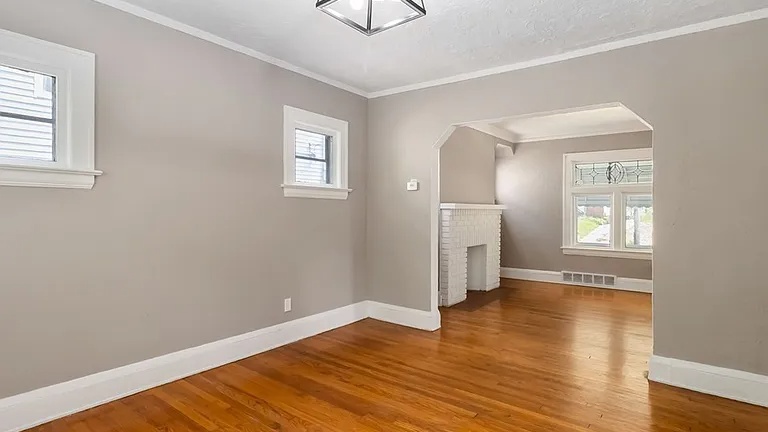

Writing Copy for Specific Staging Styles
The biggest mistake is writing generic copy for a uniquely staged property. If you choose one of our Virtual Staging styles, your copy must reinforce that narrative. The image choice becomes the foundation of your prompt:
Organic Modern: When using Agent Lens’s Organic Modern mode (natural, minimalist, Japandi-inspired), prompt the AI to use language associated with wellness and tranquility. The copy should promise a sanctuary using words like "sustainable," "natural light," and "restorative".
Mid-Century Modern: If you choose Agent Lens’s Mid-Century Modern mode (iconic teak woods, tapered legs), prompt for historical and architectural focus. The copy should promise "clean lines" and appeal to the sophisticated collector.
Modern Farmhouse: If using Modern Farmhouse (rustic charm, reclaimed wood, shiplap), prompt the copy for words like "cozy," "rustic chic," and "gathering space," tapping into a highly sought-after aesthetic.
Warm Maximalism: For luxury properties, use Agent Lens’s Warm Maximalism mode (moody luxury, deep colors, velvet). The copy must reflect opulence, using terms like "lavish," "jewel tones," and "sophisticated retreat."
Want to test this? Agent Lens offers 3 free credits on signup—no credit card required.
5. Prompting for Transformation: Matching Words to Agent Lens Modes
Our functional and renovation modes allow you to show buyers a property's potential. The image captures the future value, and your AI text must now articulate and justify it.
Dealing with Clutter and Vacancy (Selling the Potential)
Vacant or cluttered rooms are the hardest to describe because the visual reality is distracting. We solve this with two core functional tools:
Virtual Declutter Workflow: If the home is occupied but messy, use Agent Lens's Virtual Declutter mode to remove personal items while KEEPING existing furniture. Your description prompt should then focus on structural size and light, avoiding any reference to the removed items.
Magic Eraser Workflow: For completely empty rooms (cleared using Magic Eraser - Empty Room), pair this blank canvas with a staged image created in one of our four styles. Prompt the AI to explicitly describe the potential: "This expansive living area (see Virtual Staging for design potential) offers maximum flexibility for your vision."
Describing Value with Virtual Renovations
Agent Lens’s Virtual Renovations allow you to show buyers major value upgrades instantly (Kitchen Remodel, Interior Renovation, Exterior Makeover). The copy must now justify a higher price point by detailing the cost-savings of a completed project. The copy must shift from describing the change to prescribing why it matters.
Kitchen Remodel: When using Kitchen Remodel (replace countertops to quartz, repaint cabinets, modern backsplash), prompt the AI to use financial and materials language: "Newly reimagined kitchen featuring high-end quartz countertops and custom, slow-close cabinetry—all the luxury upgrades without the construction timeline."
Interior Renovation: If you use Interior Renovation to fix walls/floors/fixtures, prompt the AI to emphasize move-in readiness and quality materials. The copy sells zero deferred maintenance.
Exterior Makeover: When using Exterior Makeover (full facade repaint, landscaping, fixtures), the copy should emphasize lifestyle and desirability. Prompt: "A comprehensive exterior transformation ensures stunning curb appeal that creates an unmatched first impression."
Learn how to market tenant-occupied homes with Virtual Declutter
Table 2 Title: Prompt Templates for Visual-Text Alignment
Agent Lens Mode | Goal of Visual/Text Pairing | Copy Prompt Instruction | Key Language to Use |
|---|---|---|---|
Virtual Staging: Organic Modern | Appeal to tranquility/wellness-focused buyers. | “Draft a description emphasizing natural light, sustainable materials, and relaxation.” | Tranquil, natural linen, restorative, organic textures. |
Virtual Staging: Warm Maximalism | Appeal to high-end, dramatic luxury buyers. | “Write a luxurious description focusing on deep colors, velvet, and entertaining.” | Lavish, moody, opulent, jewel tones, sophisticated retreat. |
Virtual Renovations: Kitchen Remodel | Justify higher price point; focus on materials. | “Focus exclusively on the kitchen renovation, citing specific high-end finishes and move-in readiness.” | Quartz, modern backsplash, zero deferred maintenance, custom cabinetry. |
Functional Tools: Virtual Declutter | Eliminate visual distraction; focus on space. | “Describe the room’s potential for flexibility and size, avoiding current furniture details.” | Expansive, flexible layout, bright, customizable space. |
6. Competitor Failures, Cost Efficiency, and The Trusted Review
While every competitor promises speed and efficiency, the real challenge is minimizing friction and maximizing quality output.
The Frustration of Specialized Competitors
All-in-one platforms often introduce their own complexity. While tools like Structurely offer great lead nurturing systems, they demand significant agent time and focus. Furthermore, relying exclusively on high-cost specialized platforms for creative listing copy often becomes an expensive compromise, resulting in the same generic output agents are trying to avoid. Lofty AI users, for example, have specifically mentioned a "steep learning curve" and "long waiting times" for customer support, which directly negates the value of the platform's speed!
The BoxBrownie Trade-off (Time vs. AI Speed)
Human-driven services, like traditional virtual staging and copywriting firms, deliver excellent, professional results. However, they rely on a manual workflow that introduces a significant time delay of 24 to 48 hours. When inventory is low or market speed is high, 48 hours is simply too long to wait. The high cost—up to $75 per image/listing—is a major deterrent for high-volume agents.
The core operational requirement for success in a competitive market is minimizing time to market. By combining the speed of Agent Lens (8–15 seconds) with the flexibility of a prompted LLM, you can launch a fully staged, perfectly described listing in minutes of leaving the property. This maximizes your first-day exposure and directly supports the goal of a reduced DOM.
The micro-cost structure of Agent Lens ($0.10–$0.33 per image) means agents who spend the typical monthly tech budget ($50–$250) can afford unlimited visual experimentation. This scalability allows you to prioritize quality visuals and customized text without breaking the bank on expensive human services. The necessity of technology spend is clear, but the key is ensuring that spend translates directly to market advantage (National Association of REALTORS® 2026 Technology Survey).
7. Ethics and Auditing: Your Responsibility with AI Copy
Remember, AI is a tool to enhance your process, not a shield to hide behind. Agents are ultimately liable for all claims made in the listing.
Fact-Check Everything
AI models will hallucinate. They create plausible, compelling narratives that may be factually inaccurate. Relying solely on AI to generate details about square footage, materials, or neighborhood specifics constitutes a severe legal risk and directly violates the Realtor® Code of Ethics against exaggeration or misrepresentation.
You must treat AI generation as a first draft only. The necessary workflow includes a mandatory audit:
Input detailed, verified facts into the prompt.
Generate copy using the triple-threat strategy.
Cross-reference the final draft against the official MLS data sheet before publishing.
Avoiding the Fair Housing Traps
AI tools can inadvertently perpetuate bias based on their massive training data. Agents must ensure their final descriptions comply strictly with the Fair Housing Act and do not use discriminatory language related to protected classes. The text must be reviewed by the agent before publication.
Furthermore, when using Agent Lens’s transformation modes, disclosure is critical. If you use Virtual Staging, Kitchen Remodel, or any transformation mode, you must clearly state that the image is AI-generated. This ethical transparency builds trust and preserves the human element that remains central to the trusted client relationship.
🚀 The Human Element Is You.
You can't afford to waste time writing copy that feels generic. AI is no longer a luxury—it’s the fastest, most scalable way to make your listings pop.
By mastering the three-step prompt engineering blueprint, you take absolute control of your message, inject your unique brand voice, and ensure your descriptions perfectly complement the stunning, high-quality visuals created instantly by Agent Lens. Stop writing like a robot and start converting leads with speed and professional style.
Ready to cut your DOM by 50%? Get high-converting visuals and the copy to match, all in one seamless workflow.
Free Real Estate Tools
Explore our free calculators and AI tools for agents:
Transform Your Listings with AI
Apply professional virtual staging and enhancements in seconds. Start transforming your listings today.
Explore Virtual Staging Options
Start with our most popular room & style combinations: