

In the modern real estate world, a buyer’s first viewing almost always happens online. Faced with an endless feed of listings on platforms like Zillow, Redfin, or social media, you have seconds to capture a potential buyer's attention.
The decisive tool in this battle? Visual content.
Bad photos—or a lack of them—are a guaranteed way to lose a buyer before they even read your description. Visual marketing in real estate isn’t just about "pretty pictures"; it’s a strategic approach that directly impacts your final sale price and time on market.
Here is how to create visual assets that actually sell.
1. The Power of First Impressions: Photography is Queen
The statistics are ruthless: you have mere seconds to hook a user scrolling through hundreds of homes. The cover photo determines whether they click or scroll past.
Professionalism Wins: Hiring a professional real estate photographer is an investment, not an expense. They understand how to manipulate light, angles, and composition to showcase the property’s best features. A smartphone, no matter how advanced, rarely competes with professional gear.
The Right Angles: Use wide-angle lenses (without extreme distortion) to demonstrate the scale of rooms. Shoot from chest or eye level to create a sense of presence. Horizontal shots work best for most major platforms.
Natural Light: The best time to shoot is during the day when rooms are flooded with natural light. Never shoot directly into a window (backlighting).
Key Zones: Ensure you have high-quality shots of the facade (curb appeal), the living room, kitchen, master bedroom, bathrooms, and any unique selling points (a balcony with a view, a fireplace, or a walk-in closet).
Quantity & Flow: Upload 15-25 photos for a standard apartment to give a complete picture. Lead with your strongest image—usually the living room or the best exterior view.
2. Preparing the Canvas: Staging is Critical
Even the best photographer cannot save a cluttered, messy home. Pre-sale preparation, or Home Staging, is the foundation of success.
Declutter: Remove excess items, fridge magnets, and piles of paper. Buyers need to imagine their life there, not yours.
Depersonalize: Hide personal hygiene items, family photos, and specific clothing.
Cleanliness: A deep clean is non-negotiable. Windows, floors, and fixtures must sparkle.
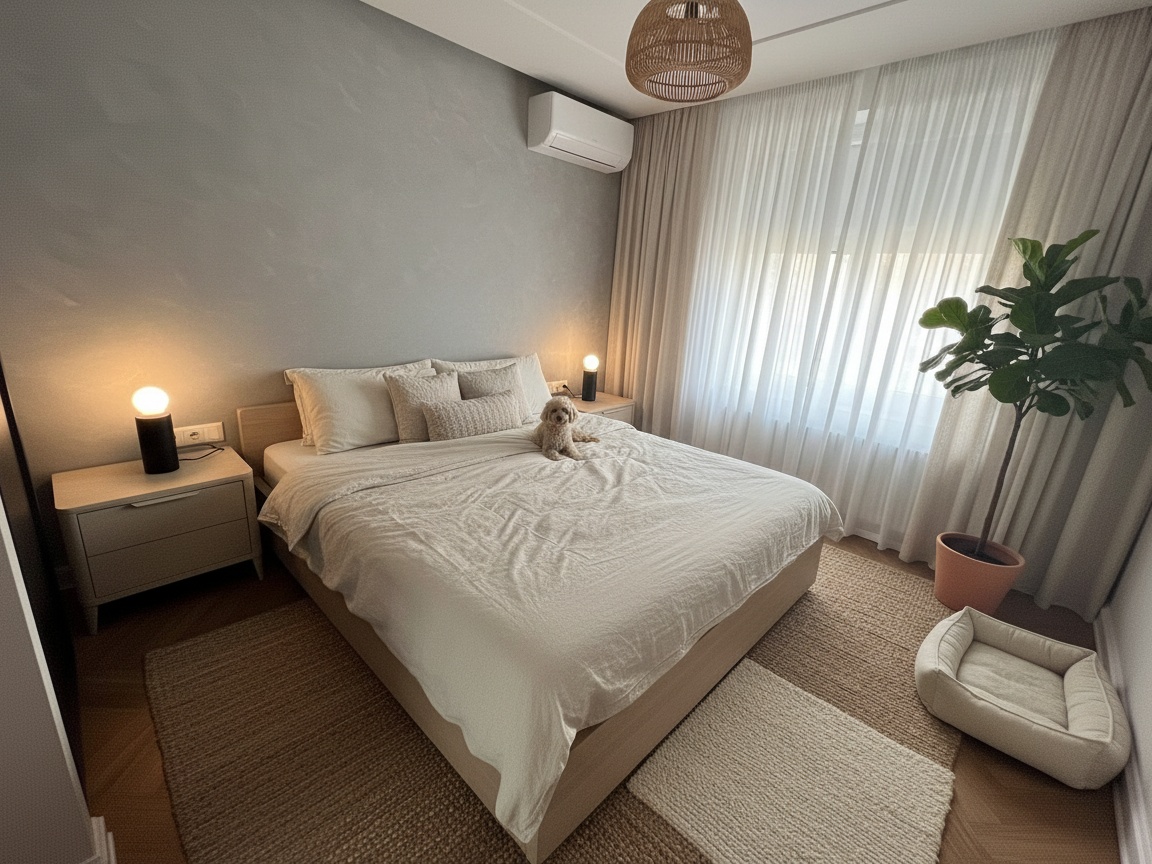
Create "Hygge": Add neutral decor elements: a throw blanket on the sofa, fresh flowers in a vase, or a coffee table book. The goal is to make the space feel lived-in but universally appealing.
The Modern Solution: AI & Virtual Staging
What if the apartment is empty, or the renovation is hopelessly outdated? Physical staging costs thousands of dollars and takes weeks.
This is where Virtual Staging becomes your secret weapon.
Tools like the Agent Lens Chrome Extension are changing the game. Instead of hauling furniture, you can simply upload a photo of an empty or ugly room, and the AI will instantly furnish it or visualize a renovation. This allows buyers to see the potential of the space immediately, without the heavy cost of physical staging.
3. Beyond the Photo: Video, 3D, and Floor Plans
While photos are the baseline, modern buyers expect a more immersive experience.
Video Tours: A short (1-3 minute) walkthrough, shot in one smooth take (using a gimbal), helps buyers understand the flow and atmosphere of the home. This format is also perfect for Instagram Reels and TikTok.
3D Tours: Technology like Matterport creates a "digital twin" of the property, allowing buyers to walk through the home virtually in 360 degrees. This significantly increases engagement and filters out non-serious viewers.
Floor Plans: A clear 2D floor plan with dimensions is essential for understanding functionality. 3D floor plans with furniture layouts are even better for visualization.
Drone Photography: For houses and land, aerial shots show the property in context—property lines, proximity to parks, water, or neighbors.
4. Tell a Story, Don't Just Show Walls
High-converting visuals evoke emotion and tell a story.
Focus on Lifestyle: Don't just show a "100 sq. ft. kitchen." Show a "cozy kitchen perfect for morning coffee while watching the sunrise." Capture the sunlight hitting the breakfast nook or a cozy reading corner.
Highlight Advantages: If you have high ceilings, shoot low to emphasize them. If there is a park nearby, include a photo of it.
Know Your Audience: Visuals for a bachelor pad studio will differ vastly from a family home where you need to highlight the safe backyard or the nursery potential.
Conclusion
In the digital age, visual content is your best salesperson. High-quality, thoughtful photos, videos, and AI-enhanced staging don't just attract attention—they build trust and desire.
Investing in professional presentation allows you to sell faster and for a higher price. Remember: from the first click to the final signature, the buyer is guided by what they see. Make it irresistible.
Install Agent Lens Extension – Get 3 Free Credits
Free Real Estate Tools
Explore our free calculators and AI tools for agents:
Transform Your Listings with AI
Apply professional virtual staging and enhancements in seconds. Start transforming your listings today.
Explore Virtual Staging Options
Start with our most popular room & style combinations: