

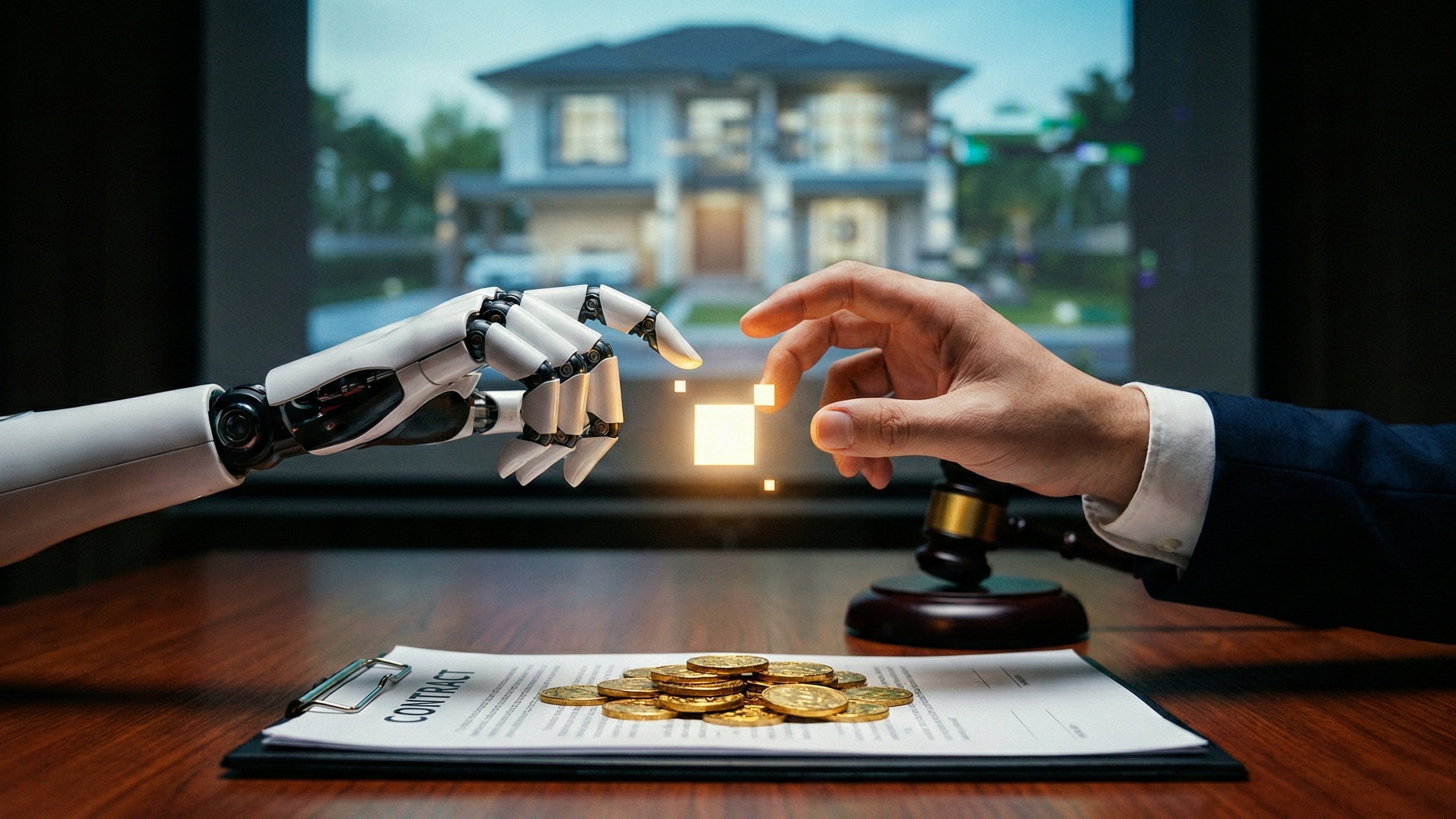
Introduction: The Ownership Paradox in Modern Real Estate
In the high-velocity world of real estate marketing, a profound paradox has emerged at the intersection of law and technology. The industry is currently undergoing a rapid transformation driven by generative artificial intelligence, a technology that promises—and delivers—exponential gains in efficiency and cost reduction. Tools capable of virtually staging empty homes, removing unsightly clutter, and even "remodeling" dated interiors are now available for pennies on the dollar compared to traditional methods. Yet, this democratization of high-end visual marketing has destabilized the foundational asset upon which the industry’s data ecosystem is built: copyright.
For decades, the ownership of listing photography was a relatively binary equation. Rights resided either with the creative professional who captured the image or with the brokerage that commissioned it under a "work made for hire" agreement. In either scenario, a human "author" existed, and federal copyright protection served as the bedrock preventing unauthorized use by competitors, data scrapers, and third-party aggregators. Today, however, as real estate professionals increasingly rely on algorithmic generation to produce their most visually compelling assets, they are unwittingly stepping into a legal void where federal protection may vanish entirely.
Recent definitive rulings by the United States Copyright Office (USCO) and federal courts have crystallized a new legal reality: works created without sufficient human control—specifically those generated by autonomous AI systems—are ineligible for copyright protection. This creates a precarious scenario for the real estate industry, suggesting that the most valuable visual data in a listing may effectively be born into the public domain.
This report offers an exhaustive analysis of the intellectual property landscape surrounding AI-generated real estate imagery. It examines the "human authorship" requirement established in recent case law, including Thaler v. Perlmutter and Sahni v. Copyright Office; analyzes the Terms of Service of major prop-tech vendors against the backdrop of federal statutes; and explores the strategic risks of relying on uncopyrightable assets in a hyper-competitive market. By viewing these developments through the lens of economic agency theory and legal precedent, we aim to provide a comprehensive roadmap for navigating this uncharted territory.
Part I: The Legal Foundation and the Crisis of Authorship
To understand the current crisis, one must first understand the constitutional and statutory architecture of American copyright law. The confusion pervasive in the real estate industry—where agents often believe they own AI images simply because they paid for them—stems from a misunderstanding of what copyright actually protects. It is not a reward for investment, effort, or cost; it is a specific privilege granted to human creators to incentivize intellectual labor.
1.1 The Constitutional Requirement of Human Authorship
The Intellectual Property Clause of the U.S. Constitution (Article I, Section 8, Clause 8) empowers Congress to "promote the Progress of Science and useful Arts, by securing for limited Times to Authors and Inventors the exclusive Right to their respective Writings and Discoveries." The definition of "Author" in this context has been the subject of centuries of jurisprudence, but it has consistently remained tethered to humanity.
The seminal Supreme Court case Burrow-Giles Lithographic Co. v. Sarony (1884) established that photographs were eligible for copyright protection not because of the mechanical process of the camera, but because of the photographer's creative choices: the posing of the subject, the arrangement of the costume, the selection of lighting, and the evoke expression. The Court reasoned that these choices constituted the "intellectual conception" of an author.
In the digital age, this principle has been rigorously tested and reaffirmed. The "Monkey Selfie" case (Naruto v. Slater) famously established that animals lack the standing to be authors. This biological restriction was recently extended to silicon-based intelligence in Thaler v. Perlmutter.1 Stephen Thaler, a computer scientist, attempted to register a visual work created entirely by his AI system, the "Creativity Machine," listing the machine as the author. The U.S. District Court for the District of Columbia upheld the Copyright Office's refusal to register the work, stating unequivocally that "human authorship is an essential part of a valid copyright claim".
The court’s reasoning in Thaler is critical for real estate professionals. The judge noted that copyright exists to incentivize human beings to create. Machines do not need economic incentives; they function based on code and electricity. Therefore, the purpose of the law does not apply to non-human actors. For a real estate agent, this means that if an image is generated solely by AI—no matter how beautiful, effective, or expensive the software used to create it—it has no copyright. It is, legally speaking, ownerless data.
1.2 The "Suryast" Precedent: The Limits of Style Transfer
Real estate marketing rarely involves pure creation from scratch (like the Thaler case); more often, it involves the modification of existing photos, known as virtual staging. The case of Suryast (Sahni v. Copyright Office) is particularly instructive for this specific workflow.
Ankit Sahni took an original photograph and used an AI tool, RAGHAV, to transfer the artistic style of Van Gogh’s The Starry Night onto the photo. Sahni argued that he was the author of the final derivative work because he:
Took the original photo (human input).
Selected the specific style image (human choice).
Determined the variable "strength" of the filter to apply (human control).
The USCO Review Board rejected the registration. Their analysis struck at the heart of the "human in the loop" argument. They ruled that the new expressive elements—the specific way the brushstrokes were applied, the interpolation of the pixels, and the texture of the final image—were determined by the RAGHAV algorithm, not by Sahni.
The Board characterized Sahni’s contribution of a "style strength" number as de minimis—a legal term meaning too trivial to warrant protection. They compared it to a client commissioning an artist: the client might say "paint this in a modern style," but the artist (in this case, the AI) is the one who executes the expression. Since the executor was non-human, the new elements were uncopyrightable.
Implications for Virtual Staging:
This precedent is devastating for the "click-and-drag" virtual staging apps common in the industry.
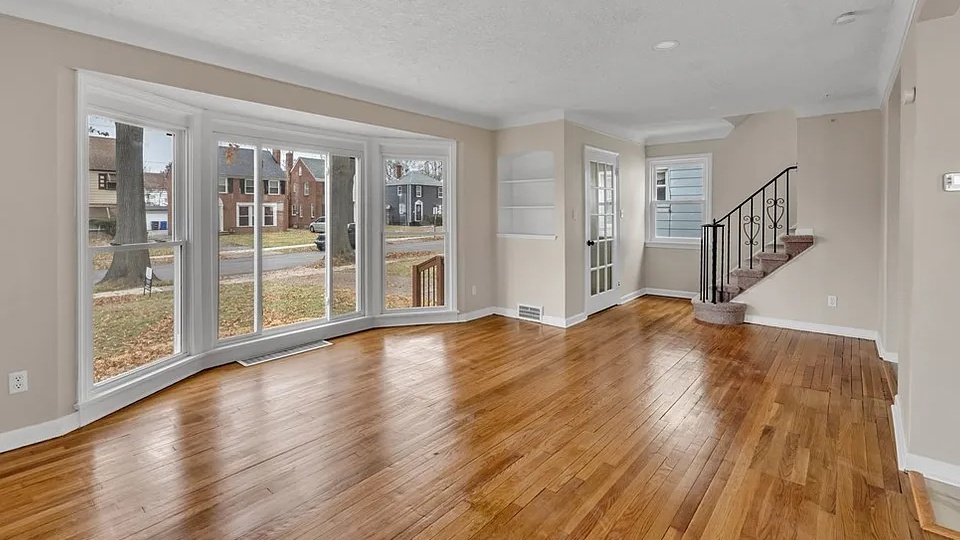
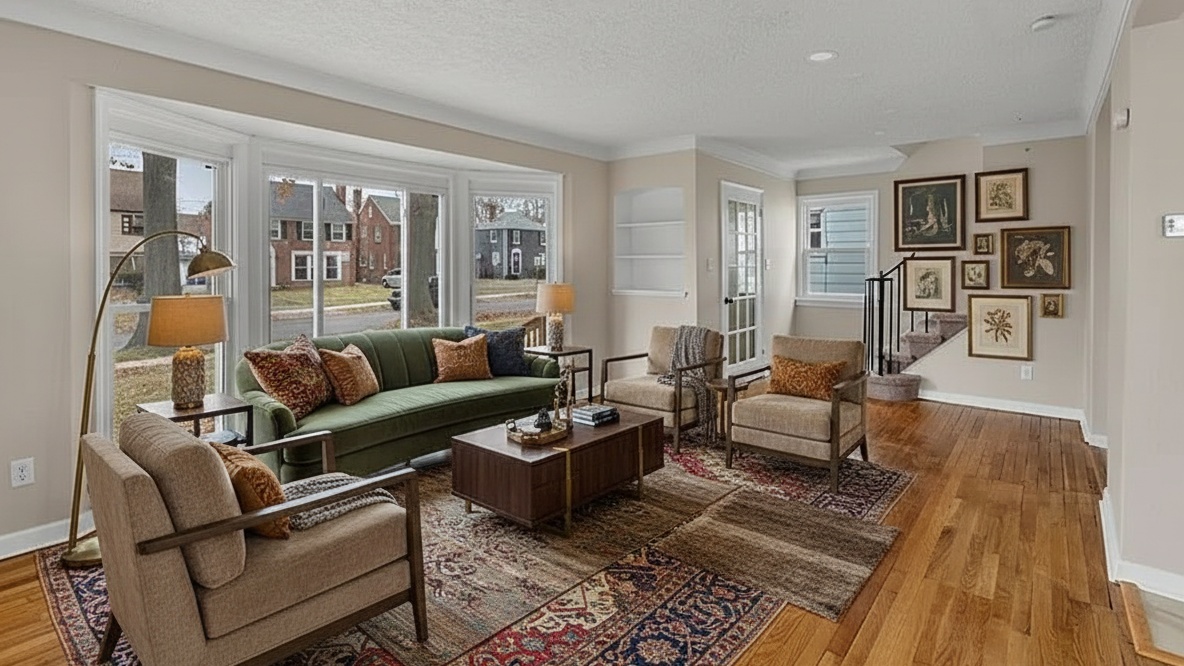
The Workflow: An agent uploads a photo of an empty living room. They select a "Modern Farmhouse" style filter. They adjust a slider for "decluttering strength."
The Verdict: Under Suryast, the virtual furniture, the lighting effects, and the textures generated by the AI are analogous to the RAGHAV style transfer. The agent provided the idea (furnish this room), but the AI provided the expression. Therefore, the agent likely owns the copyright to the empty room photo (the base layer) but not to the staged elements. A competitor could theoretically extract the AI furniture and use it, or scrape the staged image and argue that the "staged" aspect is public domain.
1.3 The "Zarya" Compromise: Selection and Arrangement
A glimmer of nuance exists in the USCO's decision regarding the graphic novel Zarya of the Dawn. The author, Kristina Kashtanova, used the AI tool Midjourney to generate images for the book. The USCO cancelled the registration for the individual images, ruling that they were not the product of human authorship because the user cannot "predict" the specific output of a diffusion model.
However, the USCO did grant a registration for the text (which was human-written) and the selection and arrangement of the images and text. This suggests a "compilation" strategy for real estate. While an individual AI-staged photo might not be copyrightable, the listing presentation as a whole—the specific sequence of photos, the combination of human-written descriptions, floor plans, and selected AI images—might be protected as a compilation.
This protection is thin, however. It protects the order of the content, not the content itself. If a third-party aggregator scrapes the individual images and rearranges them, they may not be infringing on the compilation copyright.
Part II: The Technical Reality: Enhancement vs. Generation
To navigate the legal gray zone, one must understand the technical distinction between "enhancement" (historically protected) and "generation" (now unprotected). The law generally accepts that tools used to execute a human's creative vision—like a camera, a darkroom, or Adobe Photoshop—do not negate authorship. The critical factor is creative control.
2.1 The Spectrum of Control
The USCO distinguishes between AI as a tool (assistive) and AI as a creator (generative). This distinction can be mapped onto current real estate photography workflows:
Workflow Level | Technical Process | Human Control | Copyright Status |
|---|---|---|---|
1. Traditional Photography | Digital sensor captures light; human selects angle/exposure. | High (Master Mind) | Protected |
2. Manual Editing (Photoshop) | Human uses brush/clone tools to remove objects pixel-by-pixel. | High (Direct Execution) | Protected |
3. AI Assistive (Magic Eraser) | Human selects region; AI infills texture based on surroundings. | Moderate (De Minimis if small) | Likely Protected (as enhancement) |
4. Hybrid AI Staging | Human places 3D wireframes; AI renders textures/lighting. | Moderate/High | Gray Area (Arguable Authorship) |
5. Generative Staging | Human prompts "add furniture"; AI determines placement/style. | Low (Idea only) | Unprotected (Public Domain) |
2.2 Solving the "Thaler" Paradox: Why Your Photos Stay Yours Critics often
Critics often argue that auto-enhancement strips away human authorship. This is true for tools that generate images from nothing but text. However,
operates differently. It creates derivative works based on your original photography.
Because the underlying structure—the walls, the windows, the unique perspective of the room—is captured by you, the human photographer, the resulting image retains that human foundation. The AI is merely acting as a sophisticated editing filter, much like an advanced version of Photoshop. As long as the original architectural reality remains visible (which Agent Lens prioritizes), your claim to the image remains stronger than with purely generative competitors.
Pro Tip: Always save your original 'Before' photo. This is your ultimate proof of ownership in any copyright dispute.
2.3 The Stochastic Nature of Diffusion Models
The underlying technology of most modern AI art tools (Midjourney, Stable Diffusion, DALL-E) further complicates the authorship claim. These models work via diffusion, a process of starting with random noise (static) and iteratively "denoising" it to form an image that matches a text prompt.
Because the process begins with random noise, it is stochastic (random). If a user enters the same prompt twice, they will get two different images. This lack of repeatability was cited by the USCO in the Zarya decision as evidence that the user is not the "master mind" of the work. The user acts more like a manager giving a brief to a subordinate than an artist executing a vision. In copyright law, giving a brief (an idea) does not grant ownership of the resulting work (the expression).
Part III: The Principal-Agent Problem in AI Tools
Economics offers a useful framework for understanding the relationship between the real estate agent (the Principal) and the AI tool (the Agent). This relationship is fraught with what economists call Principal-Agent Problems, characterized by information asymmetry and misaligned incentives.
3.1 Information Asymmetry and Adverse Selection
In this dynamic, the AI vendor (the creator of the Agent) possesses superior information regarding the copyrightability of the output. They know, based on their terms of service and technical architecture, that the images likely lack federal protection. The real estate agent (the Principal), however, operates under the assumption that "I paid for it, therefore I own it."
This leads to adverse selection: agents inevitably choose the tools that are fastest and cheapest (AI generation), unaware that they are selecting "lemons" in terms of intellectual property value. The vendors act as imperfect agents, maximizing their own utility (subscription revenue) while exposing the Principal to long-term risk (loss of asset ownership).
3.2 The "Moral Hazard" of Indemnification
Vendors further complicate this by shifting risk through indemnification clauses in their Terms of Service (ToS). A review of standard ToS documents reveals a pattern:
User Warranties: The user must warrant that they own the copyright to the input photos.
Liability Shift: The user agrees to indemnify the vendor against any claims arising from the content.
This creates a moral hazard. The AI vendor provides a tool that creates derivative works (potentially infringing on the original photographer's rights) but bears none of the cost if a lawsuit occurs. The real estate agent, often lacking legal training, accepts this risk blindly. If an agent takes a photo licensed from a professional photographer and uses an AI tool to "renovate" the kitchen, they have created an unauthorized derivative work. If the photographer sues, the AI vendor is contractually safe; the agent is liable.
Part IV: The Vendor Landscape: A Terms of Service Audit
A rigorous audit of the Terms of Service (ToS) for major industry players reveals the disconnect between marketing promises and legal reality.
4.1 BoxBrownie: The Hybrid Model
BoxBrownie offers a mix of manual editing and AI services. Their ToS states: "When you pay for a project, copyright is automatically assigned... You own the content we return to you".
Legal Analysis: For their manual services (where a human editor in a low-cost labor market edits the photo), this assignment is valid. The human editor creates a copyrightable work and transfers it to the client.
The AI Gap: However, for fully automated AI services, this clause offers a false sense of security. A vendor cannot assign a copyright that never existed. If the AI generation is uncopyrightable under Thaler, BoxBrownie’s assignment is legally void regarding those specific elements. The agent receives a file, but not a federal right to exclude others from using it.
4.2 Virtual Staging AI: The Liability Shield
The ToS for Virtual Staging AI is more defensive: "We claim no ownership rights over your User Content... You will be solely responsible for your User Content".
Legal Analysis: This platform explicitly avoids claiming they are the "author" or "owner," likely to avoid the liability of being a creator of derivative works. They position themselves as a "passive conduit." This places the entire burden of copyright establishment on the user. If the user cannot prove their own human authorship in the process (which Suryast suggests they cannot), the content is effectively public domain.
4.3 Sherwin-Williams & Behr: The Proprietary Ecosystem
Paint visualizers like Sherwin-Williams' ColorSnap and Behr's ColorSmart represent a different risk. Their ToS often claim ownership of the compilation or the software output.
Sherwin-Williams: "The compilation of the content on the Web Sites is the exclusive property of Sherwin-Williams".
Behr: "Company retains ownership of all copies of any Content and Software".
Implication: When an agent uses these tools to visualize a new wall color for a listing, they are using a proprietary ecosystem. The resulting image might be encumbered by the license of the software, restricting the agent's ability to use that image on competing platforms or claim ownership of the "design" created by the app.
Part V: The Economic Imperative: Why Efficiency Trumps Ownership
Despite the legal fragility, the economic gravitational pull toward AI is irresistible. The industry is currently undergoing a "race to the bottom" in terms of cost and a "race to the top" in terms of speed, both driven by AI.
5.1 The Cost-Benefit Abyss
The disparity between traditional and AI workflows is not marginal; it is exponential.
Metric | Traditional Home Staging | Manual Virtual Staging | AI Generative Staging |
|---|---|---|---|
Cost | $1,500 - $7,200 (approx. per month) | $30 - $100 (per photo) | $0.24 - $15 (per photo) |
Turnaround | 7 - 14 Days | 24 - 48 Hours | 30 Seconds - 1 Hour |
Logistics | Movers, Rentals, Insurance | File Transfer, Revisions | Instant Browser Upload |
Flexibility | Static Inventory | Slow Revisions | Instant Style Swaps |
5.2 The ROI Multiplier
According to the National Association of Realtors (NAR), staging is a critical driver of value:
85% of staged homes sell for 5-23% over listing price.29
81% of buyers find it easier to visualize the property.29
Speed: Staged homes sell up to 75% faster.30
When these outcomes are achieved with a $0.24 AI image versus a $5,000 physical stage, the Return on Investment (ROI) shifts from a healthy 150% to a staggering 17,000%+.25 In a market driven by "Days on Market" and commission splits, agents are rationally choosing to ignore the abstract legal risk of copyright loss in favor of the concrete financial gain of a faster sale.
5.3 The Decluttering Value Proposition
Beyond staging, the "Decluttering" capability of AI maps directly to value creation. NAR reports and banking data suggest that "cleaning and decluttering" is the #1 recommended improvement for sellers, with a potential ROI of 400-500%.31 AI tools that can digitally declutter a messy tenant-occupied apartment in seconds allow agents to unlock this value without the friction of confronting the tenant or hiring a cleaning crew. The economic utility is detached from the legal ownership status; the image sells the house regardless of who owns the pixels.
Part VI: Strategic Risks and the Public Domain Threat
While individual agents may accept the trade-off, the systemic risks to the real estate data infrastructure are profound. The industry relies on the compilation and syndication of listing data via Multiple Listing Services (MLSs).
6.1 The Scraping and "Shadow MLS" Threat
The primary defense MLSs have against data scraping is copyright. They assert copyright over the compilation of the listing data and the individual photographs.
The Threat: If a significant percentage of listing photos—specifically the high-value, "hero" shots generated by AI—are in the public domain, the legal barrier to scraping collapses.
Scenario: A tech startup could scrape millions of AI-staged images from agent websites to build a "Shadow MLS" or a competitor portal. Since the images lack federal copyright protection, the startup could argue they are free to use them. This would dilute the value proposition of the official MLS and the brokerages that pay to participate in it.33
6.2 The Derivative Work Trap
A nuanced legal danger lies in the status of AI images as derivative works.
The Conflict: If an agent uses their own photo (Copyrighted Work A) and uses AI to modify it into a Staged Photo (Derivative Work B), the status of Work B is complex. The original elements from Work A are still protected. However, the new elements (the AI furniture) are not.
Enforcement Nightmare: If a competitor copies Work B, are they infringing? Yes, because they copied the underlying room. But what if they use AI to remove the walls and keep only the furniture? They have now copied only the unprotectable AI elements. This "slicing" of copyright creates an enforcement nightmare for brokerages trying to protect their marketing assets.
6.3 Risk to Professional Photographers
The widespread use of AI "enhancement" poses an existential threat to the licensing model of professional real estate photographers.
License Violation: Photographers license photos for "marketing." They rarely grant the right to "alter the image using generative AI to change the physical characteristics of the property." An agent using "Generative Fill" to change a wall color or add a window is likely infringing the photographer's copyright by creating an unauthorized derivative work.
The Photographer's Recourse: Photographers are increasingly vigilant. There is a rising trend of photographers suing agents who exceed their license terms. The statutory damages for willful infringement can reach $150,000 per work, a catastrophic risk for a small agency.
Part VII: Future Outlook and Strategic Recommendations
The legal landscape is not static. As AI models evolve, the definition of "authorship" will continue to be tested.
7.1 The "Hybrid Authorship" Horizon
Legal scholars anticipate a shift toward a "Hybrid Authorship" test. Courts may eventually attempt to quantify the percentage of human contribution. If a user provides a highly detailed, 500-word prompt and performs significant manual in-painting, courts might rule that this meets the threshold of "creative control," distinguishing it from the simple prompts in Thaler.36
7.2 Best Practices for Industry Professionals
To navigate this environment, real estate professionals must adopt a "Defense in Depth" strategy:
The "Human in the Loop" Workflow: Maximize human authorship. Do not rely on one-click generation. Use tools that allow for manual placement of assets (3D staging) rather than pure generation. Perform manual post-processing (color grading, cropping) to add a layer of human expression to the final file.
Audit Vendor Agreements: Scrutinize ToS for indemnification clauses. Prefer vendors that offer an "assignment of rights" but understand its limitations. Ensure the vendor assumes liability for their AI's training data (to avoid Getty Images-style lawsuits).38
Watermarking and Provenance: Since copyright is weak, rely on technical barriers. Visible watermarks and C2PA (provenance) metadata can deter scrapers even if the legal protection is thin.
Strict Disclosure: Adhere to NAR's Article 2. Always label AI-generated images. This protects against fraud claims and manages buyer expectations, which is ultimately the primary goal of the marketing material.40
Own the Input: Ensure the brokerage owns the base layer photography. This provides a "backstop" of copyright protection. Even if the AI furniture is public domain, the photo of the room is not, preventing wholesale copying.
Conclusion: The Price of the "Easy Button"
The debate over "Who owns AI-generated photos?" is often framed as a risk, but for the forward-thinking agent, it represents a massive opportunity. When you use a tool like Agent Lens, you are engaged in a transaction that is both rational and profitable: you are trading hours of slow, expensive manual labor for immediate speed and market agility.
Let’s be honest about the asset class we are dealing with. A listing photo is not a painting destined for a museum; it is a high-utility marketing tool designed to sell a property now. The value of the image is in the closing of the deal.
Furthermore, Agent Lens is designed specifically to mitigate the "systemic risks" worried over by legal scholars. By functioning as a force multiplier rather than a replacement, it enhances the photography you already own. You provide the composition, the angle, and the base reality; the AI provides the polish. This approach aligns with the industry's best advice: to use tools that assist the human eye, keeping your hand firmly on the shutter—and the mouse.
Ready to upgrade your marketing?
Install Agent Lens Extension – Get 3 Free Credits
Free Real Estate Tools
Explore our free calculators and AI tools for agents:
Transform Your Listings with AI
Apply professional virtual staging and enhancements in seconds. Start transforming your listings today.
Explore Virtual Staging Options
Start with our most popular room & style combinations: