

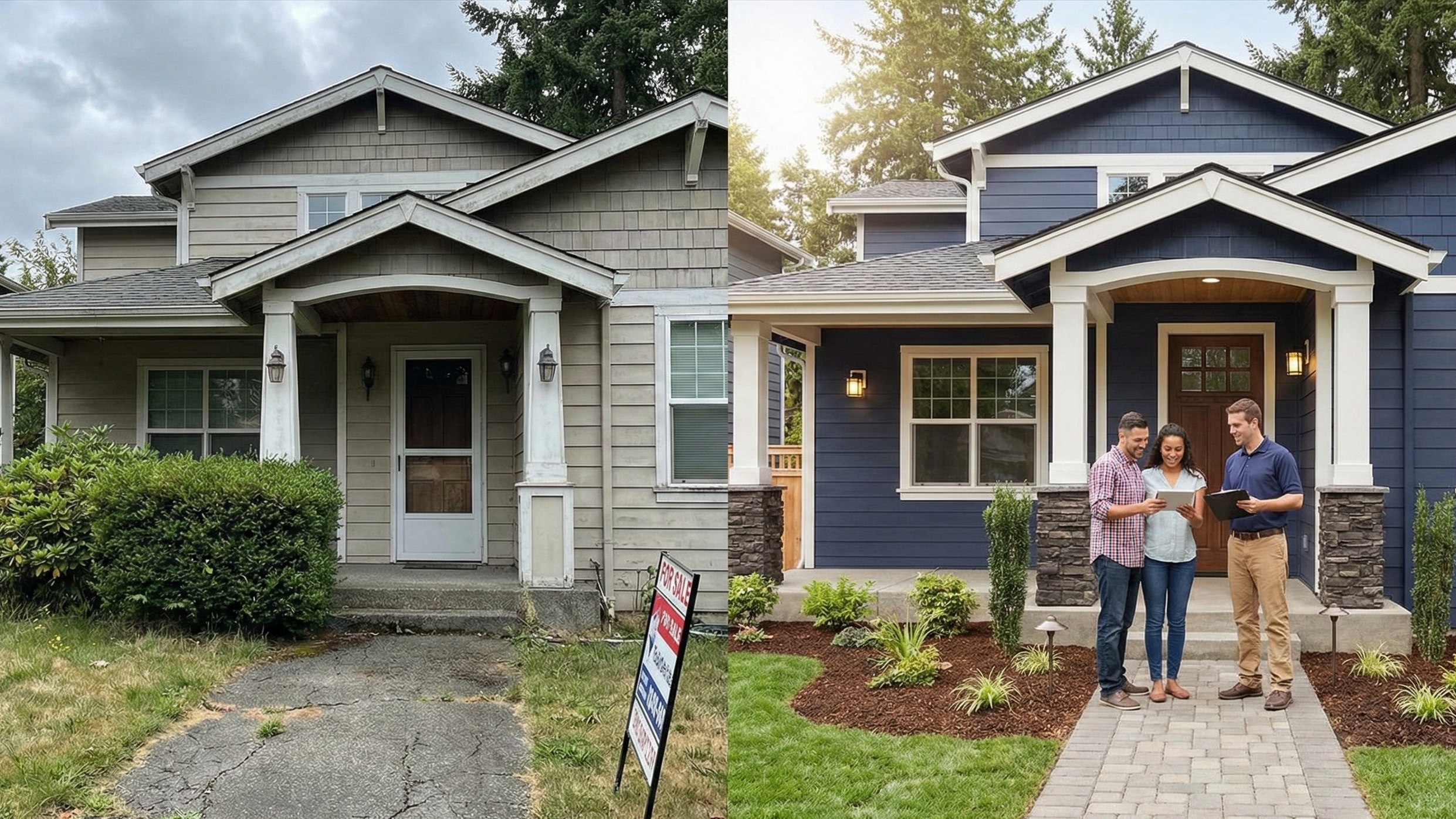
Your clients are leaving money on the table—billions of it—trapped behind faded vinyl and overgrown shrubs. We call it the "Imagination Gap." It’s that paralyzing moment when a buyer pulls up to a "fixer-upper" and can’t see past the peeling paint. In 2026, "curb appeal" isn't just about planting flowers; it’s a hard economic asset. If they can’t visualize the potential, they won’t pay for it.
Here is how you use the new wave of exterior house visualizer app tools and 2026 design trends to turn that "maybe" into a closing check.
1. The Imagination Gap: Why They Walk Away
Buyers are risk-averse. They don't have your vision. When they see a dated exterior, they don't see an opportunity; they see a money pit. They calculate the cost of failure, not the return on investment.
Here is the friction that kills the deal:
Fear of Error: "What if that 'bold' paint color looks terrible?" Exterior mistakes are public and expensive ($10k+ to fix).
The "Project" Mentality: They see weekends spent sanding and arguing with contractors, not relaxing.
Visual Illiteracy: Most people literally cannot imagine a beige house being blue. If you don't show them the "After" picture, the "Before" picture is all that exists.
You need to bridge this gap instantly. You need to show them the finished product before they sign the contract.
2. 2026 Trends: The "Bunker" Aesthetic
The design trends for 2026 are a direct reaction to the chaos of the last few years. People want homes that feel grounded, permanent, and calm. The sterile "flipper grays" are dead. Here is what buyers are actually looking for.
Sage Green is the New Neutral
If 2026 has a color, it’s Earthy Sage Green. It’s dominating the charts because it connects the home to the landscape. It makes the house feel like a sanctuary rather than a structure. It works on everything from Craftsman bungalows to modern boxes.
For more on color trends, see(#)
Urbane Bronze & Dark Contrast
For trim and accents, the move is toward deep, moody neutrals. Sherwin-Williams' Urbane Bronze is the heavy hitter here. It’s a "greige" with deep bronze undertones that looks like aged metal or wet bark.
The Look: Pair Urbane Bronze siding with crisp white trim for a high-contrast "Farmhouse" look, or go monochromatic for a modern industrial vibe.
Texture Over Plastic
Vinyl siding that looks like plastic is a liability. Buyers want texture. They want Fiber Cement (like James Hardie) because it looks authentic and has a Class A fire rating. In 2026, we are seeing a massive shift toward mixed materials—stone veneers on the foundation paired with vertical board-and-batten siding on the gables.
3. The Tech Bottleneck: Why Legacy Apps Fail
You know what looks good. The problem is showing it. You might try the "free" visualizers from the big paint companies, but you’ll quickly find out why they are free. They are built to sell paint, not to sell houses, and the user experience is often stuck in 2010.
Here is the reality of the legacy tools:
Sherwin-Williams ColorSnap
The Failure: The Crash Loop. Users frequently report the app crashing right in the middle of a project, wiping out 20 minutes of work.
The Failure: The Pink Tint. The algorithm struggles with lighting. It often renders neutral grays with a heavy pink or purple undertone that doesn't exist in the real paint, forcing you to buy samples anyway.
Behr ColorSmart
The Failure: The Matching Fallacy. The biggest complaint is simple: "The colors don't match." The digital swatch looks one way, and the paint on the wall looks completely different.
The Failure: Sharing Bugs. Good luck sending that mockup to your client. Reviews cite frequent crashes when trying to use the email or share features.
Benjamin Moore Personal Color Viewer
The Failure: Manual Labor. This is the dealbreaker. To change the color of a house, you often have to "draw" the mask yourself. You have to manually trace around every window, bush, and gutter.
The Result: It’s tedious, and unless you have the hands of a surgeon, the result looks like a messy cartoon with paint bleeding onto the roof.
4. The Solution: AI-Driven Visualization
You don't have time to manually trace windows. You need a tool that understands architecture. This is where Agent Lens changes the workflow.
We built Agent Lens specifically to solve the "Manual Masking" problem. Using the 'Exterior Makeover' mode, the AI performs semantic segmentation instantly. It looks at the photo and identifies "siding," "roof," "trim," and "grass" automatically.
Here is the Agent Lens workflow:
Upload: Drop your curb appeal photo into the extension.
Select Mode: Choose 'Exterior Makeover'.
Click: The AI masks the house for you. You select "Sage Green" for the siding and "Urbane Bronze" for the trim.
Result: The AI respects the shadows and texture. The brick looks like brick, not flat color. The shadows from the trees remain visible. It looks real.
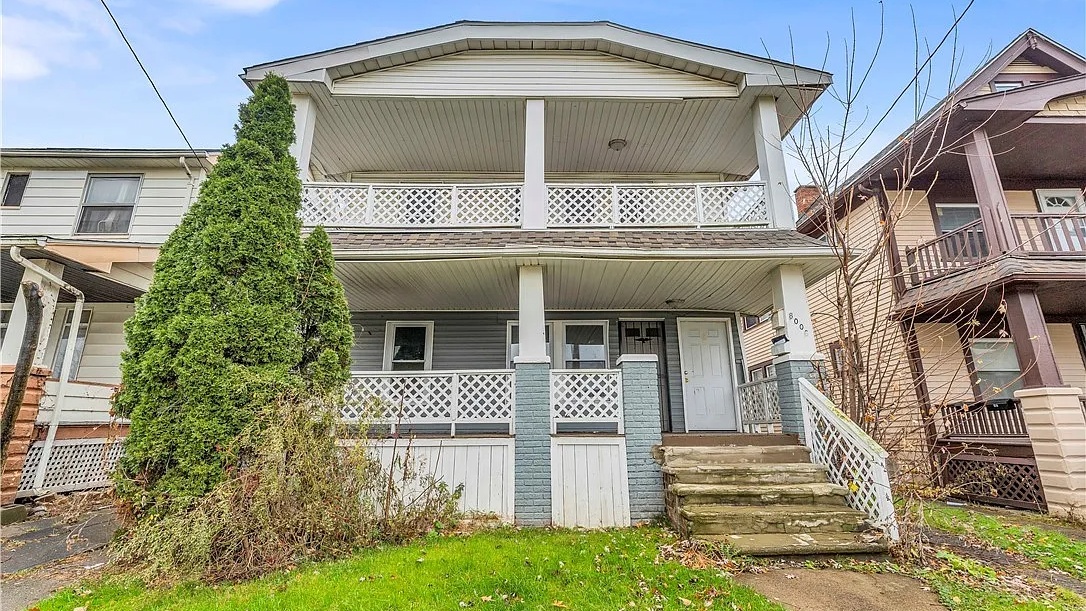
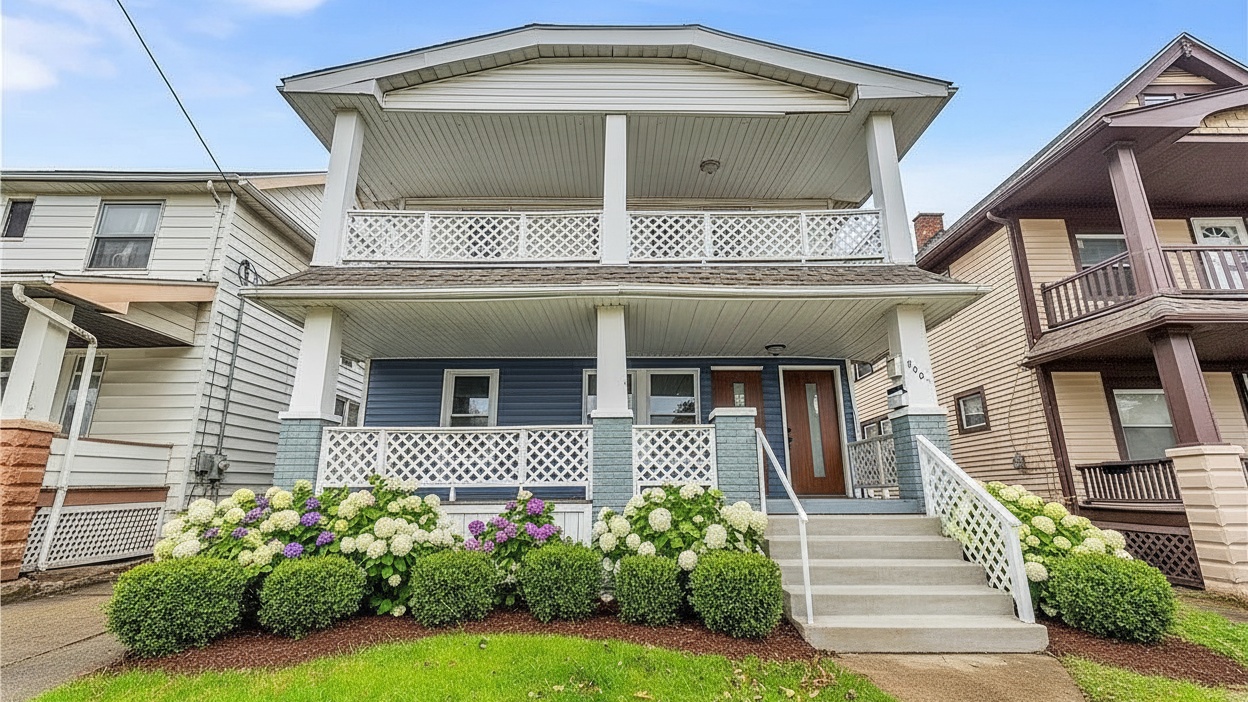
If the property is occupied and messy, you can use the 'Virtual Declutter' mode first to wipe the driveway clear of old cars and trash cans. If the lawn is dead, run 'Curb Appeal Pro' to green up the grass and replace a gloomy sky with a sunset.
Want to test this?
Agent Lens offers 3 free credits on signup—no credit card required.
5. The Economics: Where to Spend the Money
Once you've visualized the change, you need to justify the cost. According to the 2026 Remodeling Impact Report by NARI and NAR, the exterior is the highest-ROI place to spend money.
Don't guess. Look at the numbers.
Garage Door Replacement: 194% ROI
This is the king of 2026 renovations. It practically pays you to do it. Spending $4,000 on a new garage door adds nearly $8,000 in resale value.
Steel Entry Door: 188% ROI
The front door is the handshake of the home. A new steel door returns almost double what you spend.
Exterior Paint: 152% ROI
It’s not structural, but it covers a multitude of sins. Fresh paint makes a home look new and well-maintained.
Fiber Cement Siding: ~100% ROI
It’s expensive ($20k+), but you get nearly all of it back. Plus, the "Joy Score" is massive—92% of owners have a greater desire to be home after fixing the siding.
6. Staging: Physical vs. Digital
Finally, how do you market the result? You have two choices: expensive reality or efficient digital marketing.
The Cost of Reality: Physical staging is bleeding cash. In 2026, the median price for professional staging has jumped to $1,500+ just to start, plus monthly rental fees. You are locked into one style, and if the house sits, you keep paying.
The Speed of Digital: Virtual staging is the high-margin alternative.
Cost: Competitors like BoxBrownie charge around $24 per image. Agent Lens Pro plans bring this down to pennies per image.
Flexibility: You can show a "Modern Farmhouse" look and a "Traditional" look for the same room.
Transparency: Always disclose. Label the image "Virtually Staged." The goal is to show potential, not to trick the buyer.
Conclusion
Stop guessing. Stop letting clients rely on tiny paint chips and vague promises. The data is clear: the exterior is your highest-ROI asset, and the tech now exists to prove it before you spend a dime.
Whether it’s a $5,000 garage door replacement or a digital makeover with Agent Lens, the goal is the same: eliminate the fear of error. The tools are in your pocket. Go use them.
Free Real Estate Tools
Explore our free calculators and AI tools for agents:
Transform Your Listings with AI
Apply professional virtual staging and enhancements in seconds. Start transforming your listings today.
Explore Virtual Staging Options
Start with our most popular room & style combinations: